Open Source SlateDB Alternatives
A curated collection of the 1 best open source alternatives to SlateDB.
The best open source alternative to SlateDB is Instant. If that doesn't suit you, we've compiled a ranked list of other open source SlateDB alternatives to help you find a suitable replacement.
SlateDB alternatives are mainly Backend-as-a-Service (BaaS) Tools but may also be NoSQL & Document Databases. Browse these if you want a narrower list of alternatives or looking for a specific functionality of SlateDB.

Written by Piotr Kulpinski


Instant is a database solution for building real-time and offline-enabled applications, simplifying the development of collaborative products.
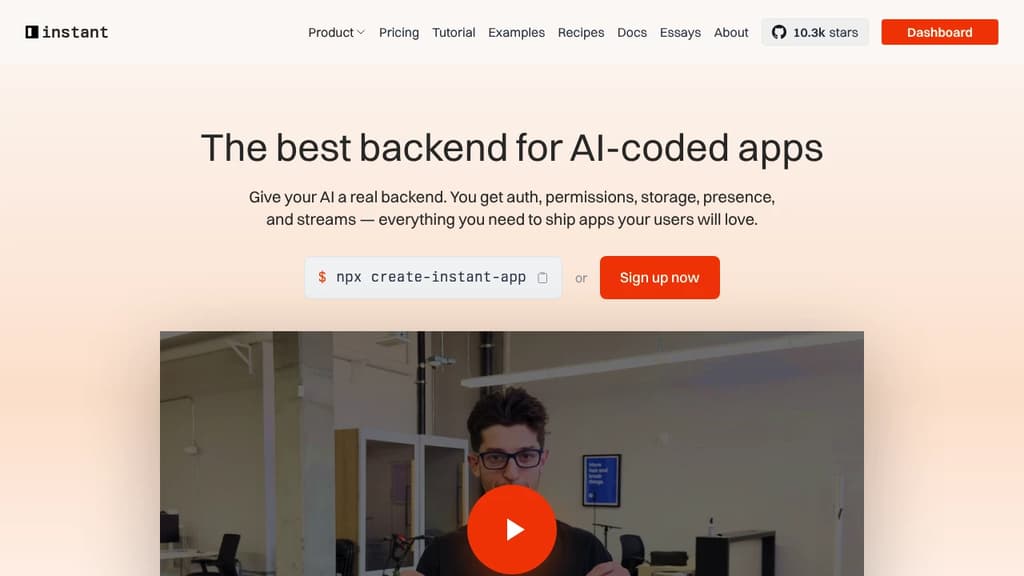
Instant is a revolutionary database solution designed for developers building real-time and offline-enabled applications. It simplifies the process of creating collaborative products like Notion or Figma by providing a database that can be subscribed to directly in the browser.
Key features and benefits:
-
Realtime Updates: Instant handles optimistic updates and rollbacks automatically, allowing developers to focus on writing frontend code without worrying about complex backend logic.
-
Multiplayer Support: Built-in infrastructure for collaborative experiences, including live updates across devices and user accounts.
-
Offline Mode: Applications built with Instant work seamlessly offline, with local caching and automatic reconciliation when users come back online.
-
Easy Integration: Developers can write relational queries directly in their app, and Instant takes care of the rest, including servers, auth, permissions, and endpoints.
-
Scalability: Start without a backend and scale to complex use cases as needed. Instant provides an admin SDK for custom backend logic when required.
-
Enhanced User Experience: Easily implement features like shared cursors, typing indicators, and presence information with minimal code.
-
Cross-Platform Compatibility: Works across web and mobile platforms, allowing developers to reuse data logic across different environments.
Instant is backed by Y Combinator and has received praise from industry leaders, including the co-founder of Firebase and engineers from Meta, Stripe, and OpenAI. The team behind Instant consists of senior and staff engineers from Facebook and Airbnb, bringing deep expertise to solve one of the largest problems in frontend development today.
By using Instant, developers can significantly reduce development time and complexity, focusing on building great user experiences rather than dealing with the intricacies of real-time data synchronization and offline support.

People are looking for alternatives to...
View all alternatives
Spotify

Claude Code

CapCut

Claude

Notion

Lovable
 Sent – Messaging Infrastructure for Developers. One API for SMS, WhatsApp, and RCS across 190+ countries.
 Sent
Sent