Open Source Sevalla Alternatives
A curated collection of the 7 best open source alternatives to Sevalla.
The best open source alternative to Sevalla is Coolify. If that doesn't suit you, we've compiled a ranked list of other open source Sevalla alternatives to help you find a suitable replacement. Other interesting open source alternatives to Sevalla are: Appwrite, Dokploy, Dokku, and /dev/push.
Sevalla alternatives are mainly PaaS & Deployment Tools but may also be Control Panels or CI/CD Platforms. Browse these if you want a narrower list of alternatives or looking for a specific functionality of Sevalla.

Written by Piotr Kulpinski


Self-hostable deployment platform that lets you deploy apps, databases, and 280+ one-click services to any server via SSH, with Git integration and automatic SSL.
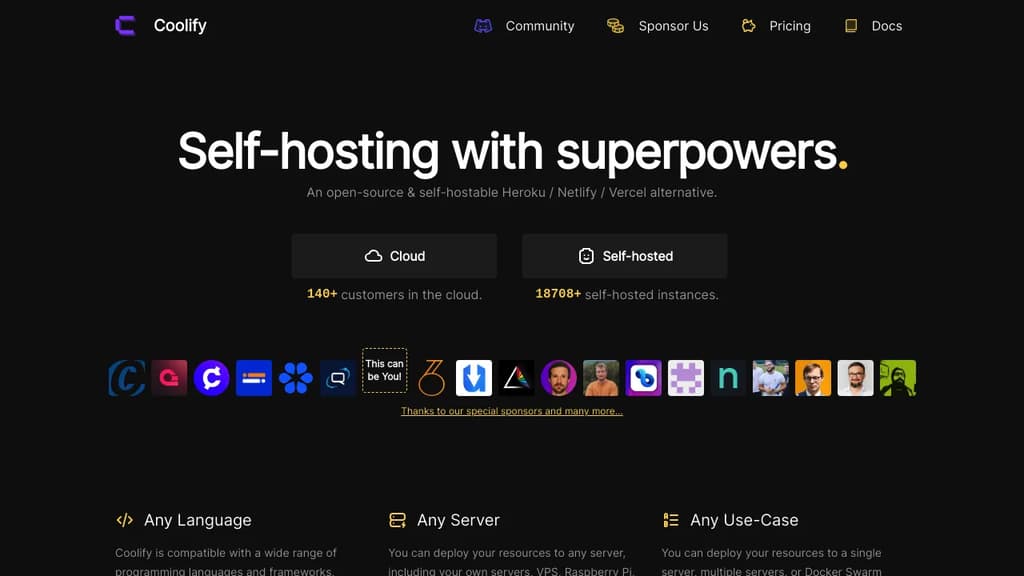
Coolify is a self-hostable platform for deploying applications, databases, and services to servers you control. It's built for developers and teams who want the convenience of platforms like Heroku or Vercel without giving up ownership of their infrastructure or paying per-seat cloud pricing.
It connects to any server over SSH. Your own VPS, a Raspberry Pi, a Hetzner box, an EC2 instance – if you can SSH into it, Coolify can deploy to it. From there, everything runs in Docker, which means any Docker-compatible service is fair game.
Key capabilities include:
- Git-based deployments from GitHub, GitLab, Bitbucket, Gitea, and self-hosted Git platforms, with push-to-deploy out of the box
- Pull request environments that spin up automatically so you can review changes before merging
- 280+ one-click services covering databases, analytics tools, CMS platforms, and more
- Automatic SSL via Let's Encrypt, renewed without any manual steps
- S3-compatible database backups with point-and-click restore
- Real-time browser terminal so you can run commands on your servers without leaving the UI
- Monitoring and alerts for deployments, disk usage, and server health, delivered to Discord, Telegram, or email
- Team support with role-based permissions across projects
- API access for automating deployments and integrating with existing CI/CD pipelines
All configuration stays on your own servers. There's no vendor lock-in: if you stop using Coolify, your apps and data stay exactly where they are. It's a practical DigitalOcean App Platform replacement for anyone who'd rather own the stack than rent it.

Open-source development platform with built-in backend infrastructure, web hosting, and security features. Scale applications using your preferred programming languages.
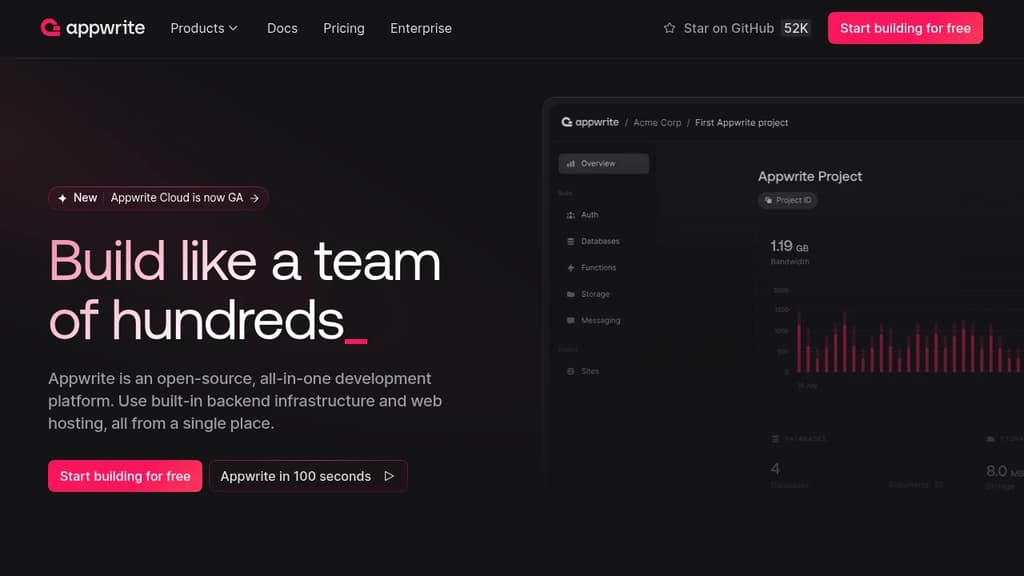
Appwrite is a comprehensive open-source development platform that provides everything developers need to build and scale applications efficiently. The platform combines backend infrastructure, web hosting, and security features in a single, unified solution.
Key benefits include:
- All-in-one platform - Backend services, databases, authentication, and hosting from one place
- Language flexibility - Work with your preferred programming languages and frameworks
- Built-in security - Security-first approach with compliance features built by default
- Global infrastructure - Multiple cloud regions and edge locations for reduced latency
- Proven scalability - Handles millions of requests and database operations monthly
The platform has helped companies like DevKind reduce development time by 60% and K-Collect cut infrastructure costs by 700%. With thousands of developers already using Appwrite, it's trusted by organizations worldwide for both passion projects and enterprise applications.
Pricing options range from free for small projects to custom enterprise solutions, making it accessible for teams of any size. The platform's Swiss Army Knife approach lets you choose and use only the tools you need, reducing complexity while maintaining powerful functionality.

Streamline your deployment process with Dokploy. Manage applications and databases on any VPS using Docker and Traefik for improved performance and security.
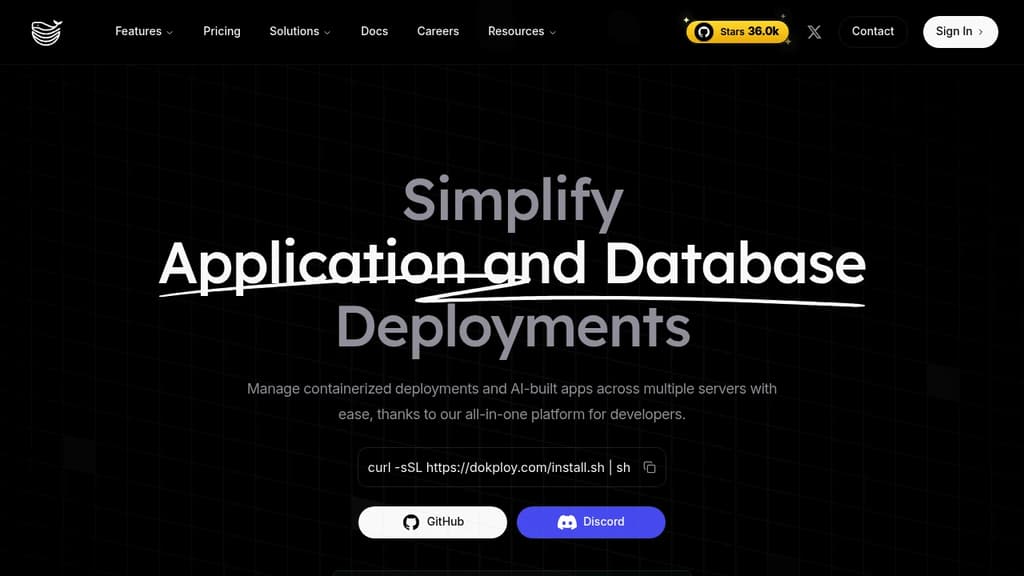
Dokploy simplifies deployment and management of applications on any VPS. This open-source platform streamlines operations by providing an all-in-one solution for managing projects, data, and system health.
Key features include:
- Native Docker Compose support for easy management of complex applications
- Multi-node scaling using Docker Swarm for cluster management
- Real-time monitoring of system performance and health
- Automated backups to protect critical data
- One-click deployment of open-source templates
- Intuitive Traefik configuration via GUI or API
- Granular user permissions for secure team management
- Direct terminal access to containers for advanced management
Dokploy offers the simplicity and flexibility of platforms like Heroku or Netlify, but with the added benefit of being self-hostable and completely free. It's perfect for personal projects, small teams, or even large-scale applications.
Unlock your deployment potential with Dokploy and take control of your infrastructure today!

A Docker-powered platform that lets you deploy Heroku-compatible applications via Git, with buildpack support and container isolation.
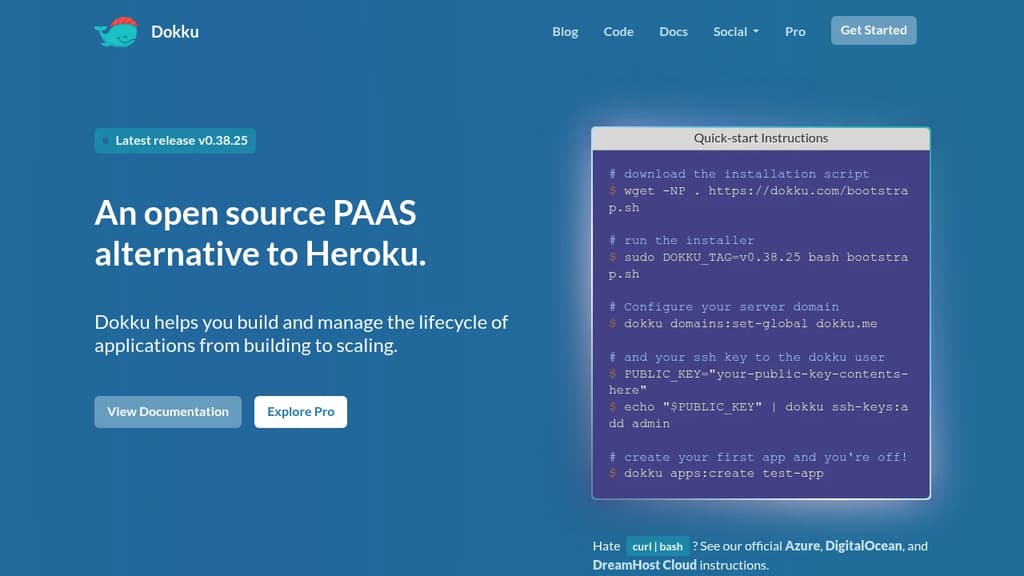
Dokku is a lightweight, open-source Platform as a Service (PaaS) that brings Heroku-like functionality to your own infrastructure. Built on Docker, it enables simple Git-based deployments and runs applications in isolated containers.
Key benefits include:
- No vendor lock-in - Install on any hardware or cloud provider
- Cost-effective - Save money compared to managed PaaS solutions
- Heroku compatibility - Uses familiar buildpacks and deployment workflows
- Extensible plugin system - Customize functionality with plugins written in any language
- Simple setup - Quick installation and intuitive deployment process
Perfect for developers who want the convenience of a PaaS without the complexity and cost of enterprise solutions. Dokku handles the heavy lifting of deployment, letting you focus on building your applications.

Open source deployment platform that deploys apps directly from GitHub with zero-downtime, real-time logs, preview URLs, and support for Python, Node.js frameworks.
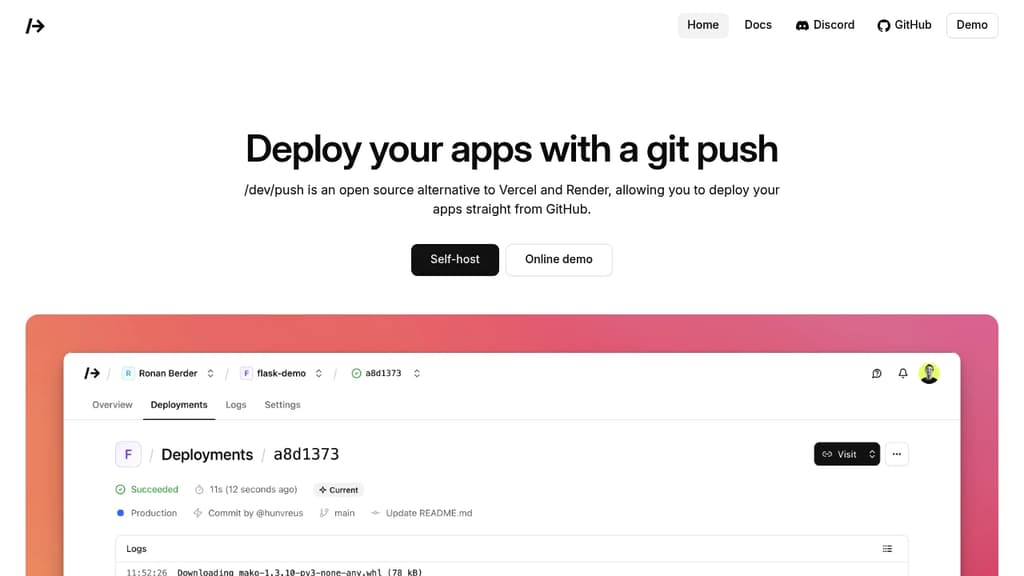
Deploy applications effortlessly with automatic deployments triggered by every GitHub push. This open source alternative to Vercel and Render offers enterprise-grade features without vendor lock-in.
Key deployment features include:
- Zero-downtime deployments with seamless production updates
- Multiple environments with branch mapping capabilities
- Real-time build and runtime logs with full search functionality
- Instant rollback to previous versions without rebuilding
- Preview URLs for every deployment, branch, and environment
Developer-friendly workflow:
- Framework agnostic - supports Python (FastAPI, Flask, Django), Node.js with PHP coming soon
- Configurable build process with custom build and start commands
- Encrypted environment variables for secure configuration management
- Custom domains with automatic SSL certificate provisioning
Team collaboration tools:
- Multi-user support with role-based permissions
- Team management for shared projects and deployments
- Branch-based workflows matching your development process
Upcoming features include SQLite database management, persistent storage, custom Docker containers, remote node management, observability monitoring, resource scaling, and cron job scheduling.
100% free and open source under MIT license - host on your own infrastructure or use the hosted version for testing. Perfect for developers seeking Vercel-like experience with full control over their deployment pipeline.

Self-hosted platform for small dev teams combining deployments, error tracking, analytics, session replay, uptime monitoring, and managed databases in one dashboard.
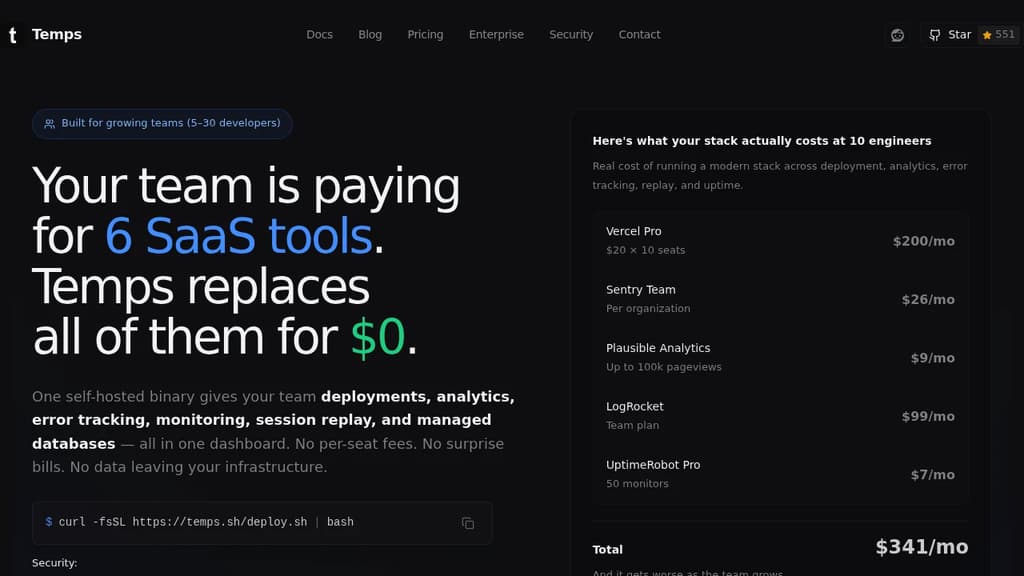
Temps is a single self-hosted binary that replaces the cluster of SaaS subscriptions most small dev teams carry: deployment hosting, error tracking, analytics, session replay, uptime monitoring, and managed databases. It runs on a VPS you already own and costs nothing beyond that server bill.
The pitch is straightforward. A 4-person team running Vercel Pro, Sentry, Plausible, LogRocket, and UptimeRobot pays around $221/month. Temps charges $0. No per-seat fees, no per-event pricing, no overages when traffic spikes.
It's built specifically for small teams of 2 to 10 developers. Everyone shares one dashboard with access to every feature. No more tracking down who holds the Datadog login or whether someone checked Sentry before filing a bug.
Key capabilities:
- Deployments: Git push from any branch triggers a build. Preview URLs for every pull request, zero-downtime rollouts, and automatic framework detection. No DevOps expertise needed.
- Error tracking: Full stack traces with source maps, Sentry-compatible so existing integrations keep working, and instant alerts to Slack or Discord.
- Session replay: Built on rrweb (17,000+ GitHub stars, also used by PostHog). No third-party scripts, no cookie banners, no data leaving your servers.
- Analytics: Privacy-friendly, first-party analytics with no external data sharing.
- Uptime monitoring: Alerts when something goes down, without a separate tool or login.
- Managed databases: PostgreSQL, Redis, MySQL, and MongoDB provisioned through the same dashboard. No AWS RDS setup, no egress fees.
Under the hood it's built on auditable, production-proven components: Cloudflare's Pingora proxy, OpenTelemetry for error tracking, TimescaleDB for analytics, and Nixpacks (Railway's buildpack system) for deployments. MIT licensed, 55+ Rust crates, fully auditable.
For teams already eyeing self-hosted alternatives to tools like HyperDX but stalled on migration risk, Temps offers a free 30-minute audit call that maps your current bill line by line to a Temps equivalent and sketches the migration path.

Self-hosted platform for web applications offering automated CI/CD pipelines, multiple environments, and Git integration - with 47% infrastructure cost savings.
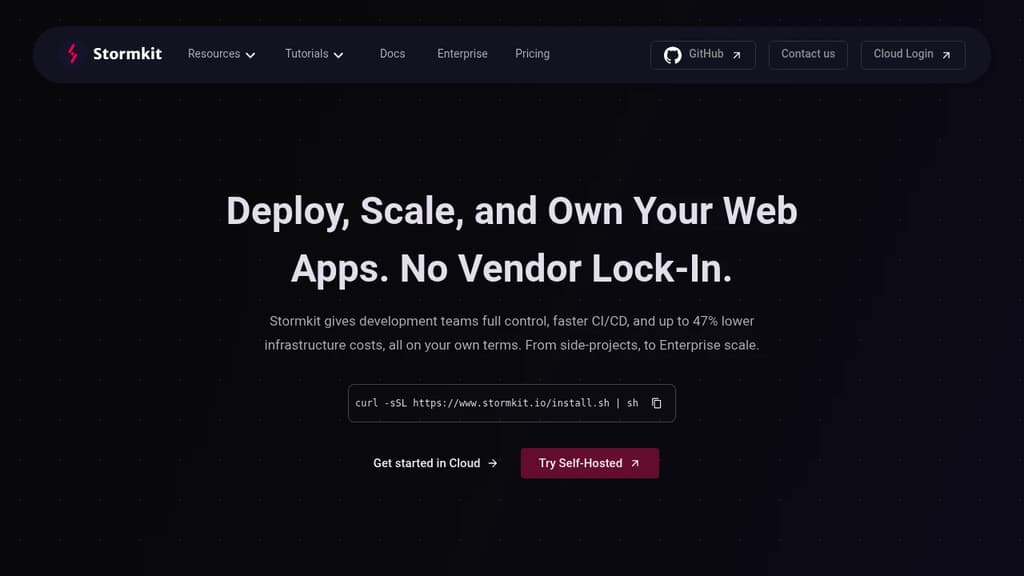
Stormkit delivers enterprise-grade deployment capabilities with complete infrastructure control. This self-hosted platform enables teams to deploy and scale web applications through automated CI/CD pipelines, while maintaining full ownership of their infrastructure.
Key advantages include:
- Significant cost savings with an average 47% reduction in infrastructure costs
- Lightning-fast deployments - 5x faster development-to-production workflow
- Robust reliability with 99.9% uptime over the past year
- Comprehensive features including deployment previews, multiple environments, status checks, and persistent volumes
- No vendor lock-in philosophy with focus on open standards and portable technology
The platform excels in various scenarios, from managing high-traffic educational portals to powering boutique tourism services. With unlimited projects, custom TLS certificates, and extensive monitoring capabilities, Stormkit provides the tools needed for modern web application deployment while maintaining security and compliance standards.

People are looking for alternatives to...
View all alternatives
Spotify

Claude Code

Claude

CapCut
Notion

Lovable
 Postiz – The All-in-One agentic social media scheduling tool

 Windshift