Open Source Relevance AI Alternatives
A curated collection of the 3 best open source alternatives to Relevance AI.
The best open source alternative to Relevance AI is AutoGPT. If that doesn't suit you, we've compiled a ranked list of other open source Relevance AI alternatives to help you find a suitable replacement. Other interesting open source alternatives to Relevance AI are: Paperclip and Agenta.
Relevance AI alternatives are mainly AI Agent Platforms but may also be AI Coding Agent Orchestrators or LLM Observability & Evaluation. Browse these if you want a narrower list of alternatives or looking for a specific functionality of Relevance AI.

Written by Piotr Kulpinski


Platform for building, deploying, and running AI agents that automate repeatable digital work across research, outreach, content, and support without writing code.
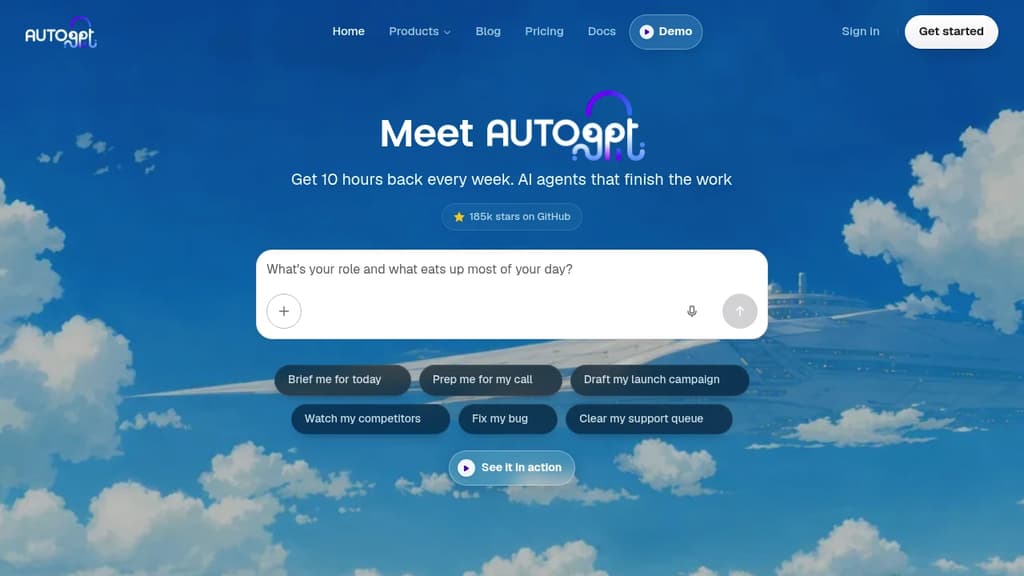
AutoGPT is an AI agent platform for people who want to hand off recurring work entirely, not just get help with a single task. You describe the outcome you want, and an agent plans and executes every step: pulling data, calling AI models, updating spreadsheets, sending messages, and looping back on a schedule. It's built for the kind of work that comes back every day or every week.
There are four ways to interact with the platform:
- AutoPilot lets you describe a job in plain English and builds the agent for you inside the conversation, no flowcharts or prompt engineering required.
- Visual Builder gives you a drag-and-drop canvas of blocks when you need exact control over branching, looping, and routing logic.
- Dashboard shows every agent's status, run history, and spend in one place, with alerts when an agent needs a decision from you.
- Marketplace offers ready-made agents from AutoGPT and the community, browsable without an account and deployable in one click.
On the integration side, the platform ships with dozens of AI models already connected (no API keys needed) and supports services like Gmail, Slack, Google Sheets, Notion, HubSpot, GitHub, and Airtable. Agents can handle chat, image generation, video, transcription, OCR, and more across 45+ platforms.
Common uses include morning briefings assembled from earnings and headlines, prospect research before sales calls, overnight campaign drafts, support ticket triage, and competitor monitoring that only pings you when something actually changes.
AutoGPT is fully open source. Self-hosting is free: you bring your own model API keys and infrastructure and get the same builder and agent runtime as the cloud. The hosted cloud removes the ops burden and covers model usage through a subscription. Teams often prototype in the cloud and move sensitive workloads on-prem later.
For teams that want a visual workflow automation approach rather than agent-based logic, tools like ByteChef or Automa take a different angle. If you're looking for an agent-first experience with a different focus, Eigent is worth comparing. AutoGPT's sweet spot is repeatable, multi-step work you can describe clearly enough to hand to a capable assistant.

Manages teams of AI agents across business functions with org charts, goal alignment, cost tracking, ticket tracing, and board-level governance controls.
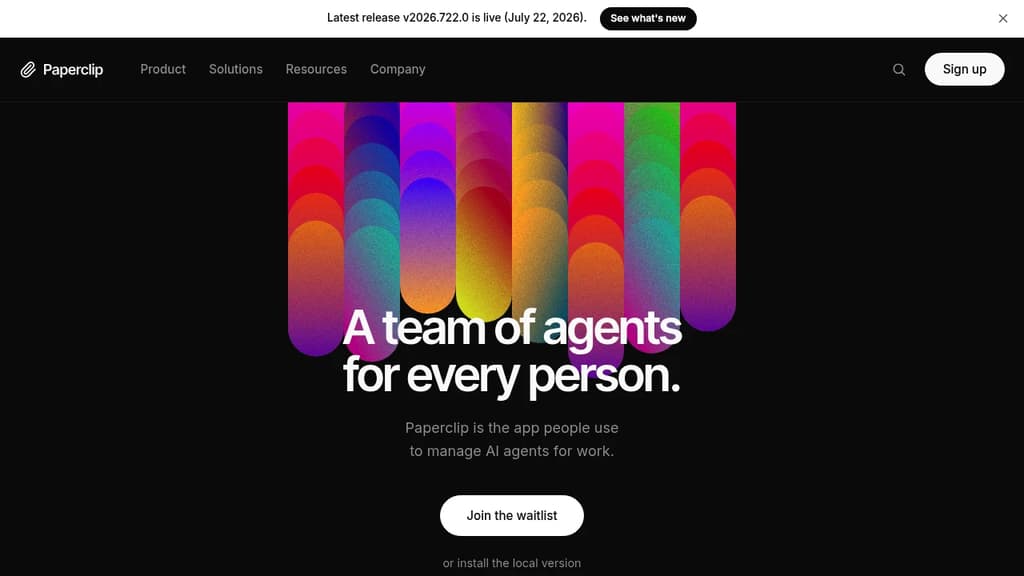
Paperclip treats your AI agents like employees, not tools. You act as the board of directors: you approve hires, review strategy, set budgets, and can pause or reassign any agent at any time. The mental model isn't "I'm prompting an AI" – it's "I'm running a company."
It's model-agnostic by design. Agents can be Claude, Codex, Gemini, OpenClaw, Cursor, or anything that can receive a heartbeat signal. Python scripts, shell commands, HTTP webhooks – if it can be triggered, it can be hired. You're not locked into any provider.
Key capabilities:
- Org charts – Agents are organized into roles (CEO, CTO, CMO, engineers) under a single company structure pointed at one goal.
- Goal alignment – Every task traces back to the company mission through a hierarchy: mission → project goal → agent goal → task. Agents know what they're doing and why, via a
SKILL.mdcontext file. - Heartbeats – Agents wake on a schedule, check their work queue, and act. Delegation flows up and down the org chart automatically.
- Budget controls – Each agent gets a monthly spend limit. At 80% you get a warning; at 100% the agent auto-pauses and blocks new tasks. Hard limits, enforced by the system.
- Ticket system – Every instruction and response is a structured ticket with full tracing: every tool call, API request, and decision point is logged in an immutable, append-only audit log.
- Governance – Agents can't hire other agents without board approval. The CEO can't execute a strategy you haven't reviewed. Autonomy is something you grant explicitly.
Paperclip is MIT-licensed and self-hosted. A single deployment can run multiple separate companies with full data isolation, useful for parallel ventures or templating org configs. It runs locally with an embedded database or connects to your own Postgres instance. No Paperclip account required.
For teams already using AI coding agents like Cline or similar tools, Paperclip sits above them – coordinating who has work checked out, maintaining sessions, tracking costs, and enforcing governance across the whole operation.

Open-source workspace for building and running AI agents: chat-driven development, scheduling, human-in-the-loop approvals, versioning, and tracing. Self-host or use the cloud.
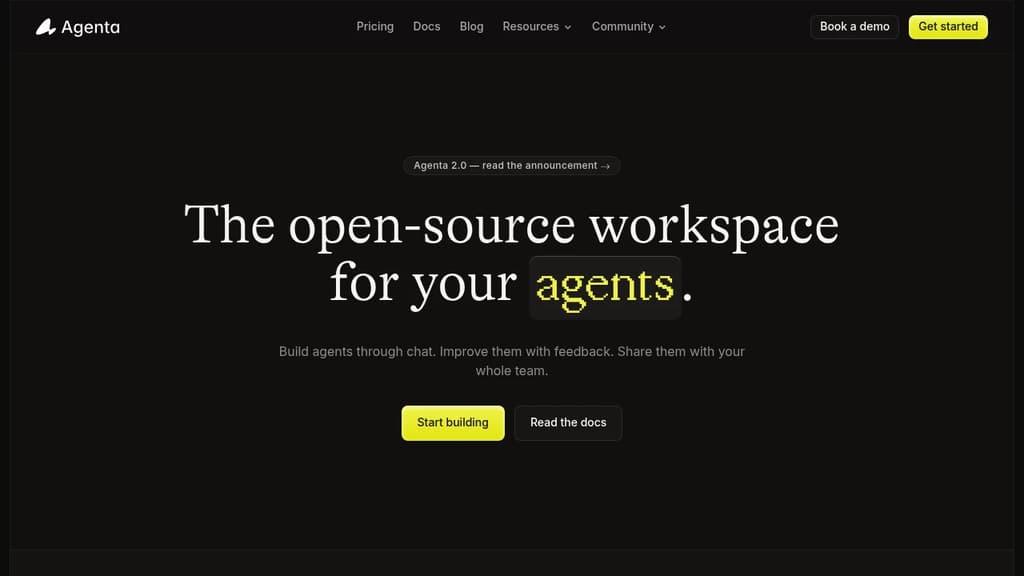
Agenta is a workspace for teams building and operating AI agents. It's built around a simple idea: you should be able to work with an agent in chat, then turn that same conversation into an automated workflow without rewriting anything.
You start by describing what you want done. The agent works with your files, apps, and integrations to get it done. When you're satisfied, you tell it when to run on its own. That's the whole loop.
Key capabilities:
- Chat-first development – build and test agents conversationally, then schedule them to run without you
- Human-in-the-loop controls – consequential actions pause for your approval before anything is sent or changed
- Full versioning – prompts, skills, and tools are versioned like code, with rollback to any point
- Run tracing – every execution shows each step, its cost in tokens and dollars, and where failures occurred
- Continuous improvement – feedback from real runs becomes test cases, and changes are evaluated before they ship
- Open standards – agents are defined as AGENTS.md files with skills and MCP tools, so you can swap the model, harness, or runtime without rewriting the agent
Agenta ships with templates for common jobs: code review, customer support, sales outreach, knowledge retrieval, and operations. The code review agent template, for instance, reads pull request diffs, flags bugs and security issues inline, and tags code owners when sensitive areas like auth or billing are touched.
For teams concerned about data residency, Agenta is MIT-licensed and fully self-hostable. The self-hosted version runs the same code as Agenta Cloud, with no feature gaps or lock-in. When running locally, you can use your existing Claude or ChatGPT subscription rather than paying for a separate API key.
Agenta fits teams that want to move agents from prototype to production without losing visibility into what's actually happening at runtime.

People are looking for alternatives to...
View all alternatives
Spotify

Claude Code

Claude

CapCut

Notion

Lovable
 Sent – A unified API for sending messages across SMS, RCS, and apps like WhatsApp.
 Postiz