Open Source Keeper Alternatives
A curated collection of the 14 best open source alternatives to Keeper.
The best open source alternative to Keeper is Vaultwarden. If that doesn't suit you, we've compiled a ranked list of other open source Keeper alternatives to help you find a suitable replacement. Other interesting open source alternatives to Keeper are: HashiCorp Vault, Infisical, KeePassXC, and Bitwarden.
Keeper alternatives are mainly Password Managers but may also be Secrets Platforms or Secure & Encrypted Notes. Browse these if you want a narrower list of alternatives or looking for a specific functionality of Keeper.

Written by Piotr Kulpinski


Unofficial Bitwarden-compatible server written in Rust, built for self-hosting on low-resource hardware without sacrificing client compatibility.
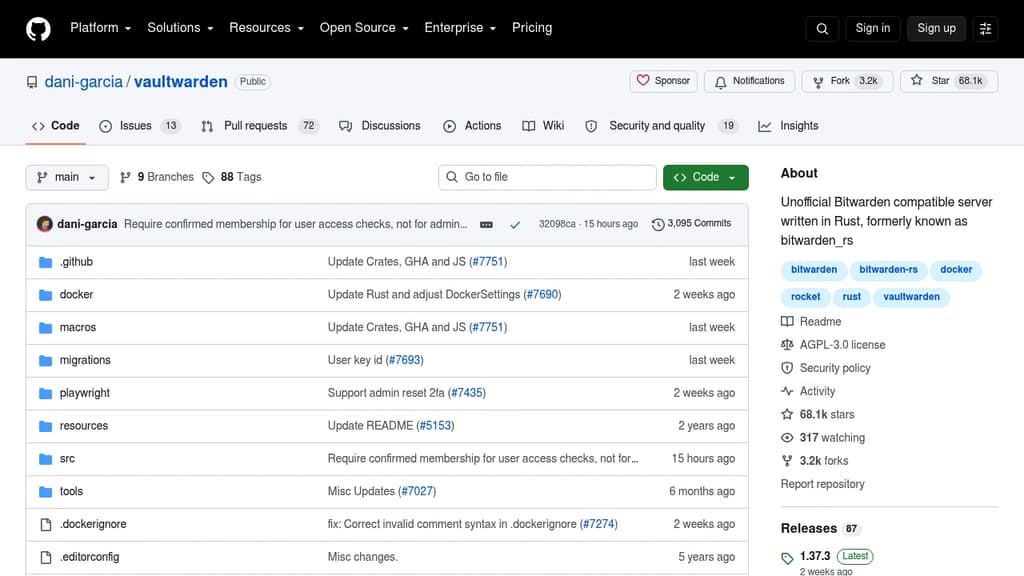
Vaultwarden is an unofficial, community-built server that speaks the Bitwarden client API. It lets you run your own password vault on hardware that would struggle with the official server, including a Raspberry Pi or a small VPS. All the standard Bitwarden apps, browser extensions, and mobile clients connect to it without modification.
The appeal is straightforward: you keep full control of your credentials, attachments, and vault data, and you don't need beefy infrastructure to do it. Written in Rust, it's lightweight by design.
Key capabilities include:
- Full vault management covering logins, secure notes, cards, and identities
- Organizations and collections for sharing credentials across a family or small team
- Two-factor authentication with multiple methods including TOTP, email, and hardware keys
- File attachments and Send (Bitwarden's encrypted file and text sharing feature)
- Admin panel for managing users, invitations, and server configuration
- Emergency access so trusted contacts can request vault access if needed
- Event logs for tracking activity within organizations
It ships as a container image for Docker and Podman, making deployment straightforward on any machine that supports containers. A built-in web vault is bundled, so you get a browser-based interface without needing to set anything else up. Running it behind a reverse proxy with HTTPS is the recommended setup, since the web vault requires a secure context for features like the clipboard API.
Vaultwarden is aimed at individuals, families, and small organizations who want the Bitwarden experience without relying on the cloud service. It's not affiliated with Bitwarden, Inc., though one maintainer is a Bitwarden employee contributing independently. Bugs and issues should go to the Vaultwarden project directly, not Bitwarden's official support.

Manages tokens, passwords, certificates, and encryption keys through a UI, CLI, or HTTP API, with dynamic credentials and encryption-as-a-service built in.
Vault is a secrets management tool built for teams that need tight control over who can access sensitive data and when. It handles tokens, passwords, API keys, certificates, and encryption keys across applications, infrastructure, and services. Access is controlled through policies, and every interaction is logged, giving security teams full visibility.
The core use cases break down into a few distinct areas:
- Key/Value secrets engine: A straightforward store for persisting arbitrary secrets in Vault's configured backend storage.
- Database credentials: Rather than storing static database passwords, Vault generates short-lived credentials on demand based on pre-configured roles. Credentials expire automatically, reducing the blast radius of a breach.
- Encryption as a service: The Transit secrets engine encrypts data in transit without storing it, so your application can offload encryption without managing keys directly.
- Data tokenization: An enterprise feature that replaces sensitive values with cryptographically secure tokens, useful for protecting things like payment card data.
Vault fits teams running complex infrastructure who need more than a basic secrets management solution. It integrates with cloud providers, Kubernetes, databases, and identity systems, and supports a zero-trust architecture where no service is implicitly trusted.
You can interact with Vault through its web UI, a CLI, or a REST API, making it adaptable to both human operators and automated pipelines. A managed cloud option (HCP Vault Dedicated) is available for teams that don't want to run their own cluster. For lighter-weight or developer-focused alternatives, tools like Keyshade or Phase cover simpler secret-sharing workflows.

End-to-end encrypted secret management platform for seamless integration and enhanced security in development workflows.
Infisical revolutionizes secret management for development teams, offering a robust, user-friendly solution to secure sensitive information. With end-to-end encryption at its core, Infisical ensures your secrets remain protected throughout their lifecycle.
Key benefits of Infisical include:
- Enhanced Security: Utilize military-grade encryption to safeguard your secrets, ensuring only authorized team members can access sensitive data.
- Seamless Integration: Easily incorporate Infisical into your existing development workflow with support for various programming languages and frameworks.
- Centralized Management: Streamline secret handling across multiple projects and environments from a single, intuitive dashboard.
- Version Control: Keep track of secret changes with built-in versioning, allowing for easy rollbacks and audits.
- Access Control: Implement granular permissions to manage team member access to specific secrets or projects.
- CI/CD Friendly: Integrate effortlessly with popular CI/CD tools to maintain security throughout your deployment pipeline.
- Open Source: Benefit from community-driven development and the ability to self-host for complete control over your data.
Infisical empowers teams to focus on building great software without compromising on security. By simplifying secret management, it reduces the risk of data breaches and enhances overall development efficiency.

KeePassXC is an open-source password manager that securely stores and manages sensitive information across Windows, macOS, and Linux.
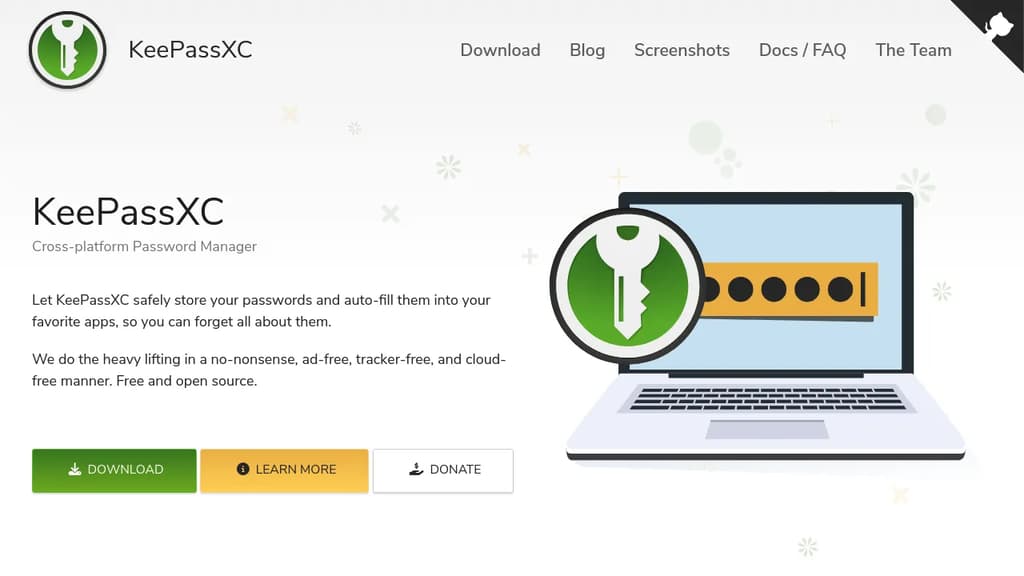
KeePassXC is a modern, secure, and open-source password manager designed for users with high demands for personal data security. It offers a robust solution for storing and managing sensitive information like usernames, passwords, URLs, attachments, and notes.
Key features:
- Secure encryption: All data remains encrypted at all times, with no cloud storage or remote servers involved
- Cross-platform compatibility: Thoroughly tested and optimized for Windows, macOS, and Linux
- Open-source: Fully transparent codebase available on GitHub under the GPLv3 license
- Offline storage: Encrypted database file can be stored locally or in any cloud solution of your choice
- No ads or subscriptions: Completely free to use without any hidden costs
- Browser integration: Auto-fill passwords in your favorite web browsers
- Passkeys support: Store and use modern authentication alternatives to passwords
KeePassXC stands out for its commitment to user privacy and data control. It offers a comprehensive solution for password management without relying on cloud services, advertisements, or tracking mechanisms. The software is actively maintained by a dedicated team, with regular updates introducing new features and security enhancements.
Getting started with KeePassXC is straightforward. Users can download the application from the official website, with installation guides available for different operating systems. The project provides extensive documentation, including a Getting Started Guide and a detailed User Guide, to help users make the most of the software's features.
For developers and security enthusiasts, KeePassXC's open-source nature invites code inspection, contributions, and community involvement, fostering a transparent and collaborative approach to password management.

Bitwarden is an open source password manager that securely stores, shares, and autofills passwords across unlimited devices.
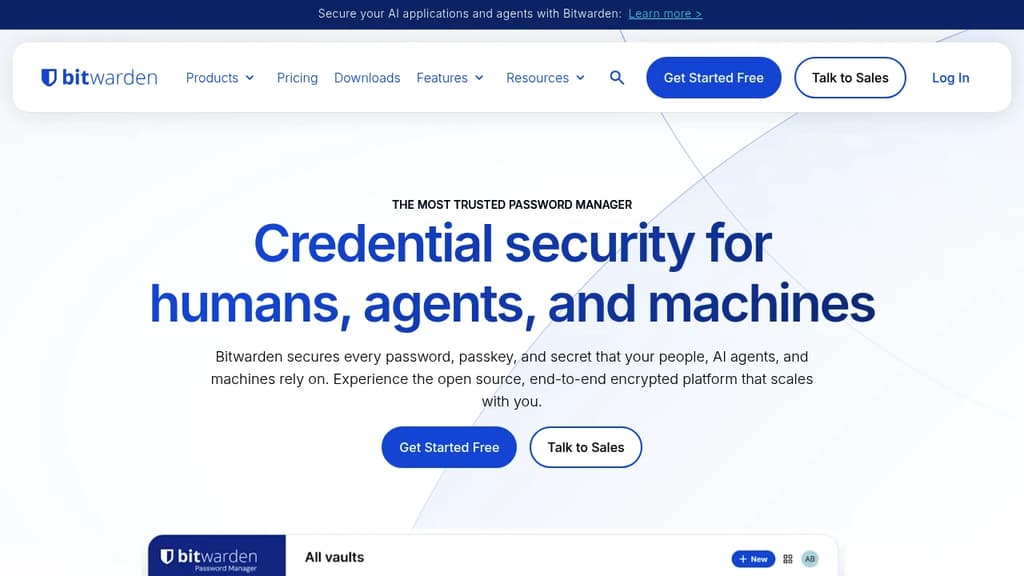
Bitwarden is a trusted open source password manager that helps individuals and businesses securely store, share, and manage sensitive data like passwords, passkeys, and credit card information.
Key features include:
- End-to-end encryption to ensure only you can access your data
- Cross-platform apps for all devices and browsers
- Secure password generation and autofill
- Ability to securely share passwords and sensitive info
- Free plans for individuals and paid plans for families/businesses
- Open source code that is regularly audited for security
- Compliance with standards like SOC 2, HIPAA, GDPR
Bitwarden offers both personal and business plans:
Personal:
- Free: Basic password management features
- Premium ($10/year): Adds advanced features like 2FA, file attachments
- Families ($40/year): For up to 6 users with unlimited sharing
Business:
- Teams ($4/user/month): For growing teams
- Enterprise ($6/user/month): Advanced features for larger organizations
With its focus on security, ease of use, and transparent open source model, Bitwarden is a top choice for securely managing passwords and sensitive data across devices.

Open source password manager focused on security, collaboration and privacy for organizations
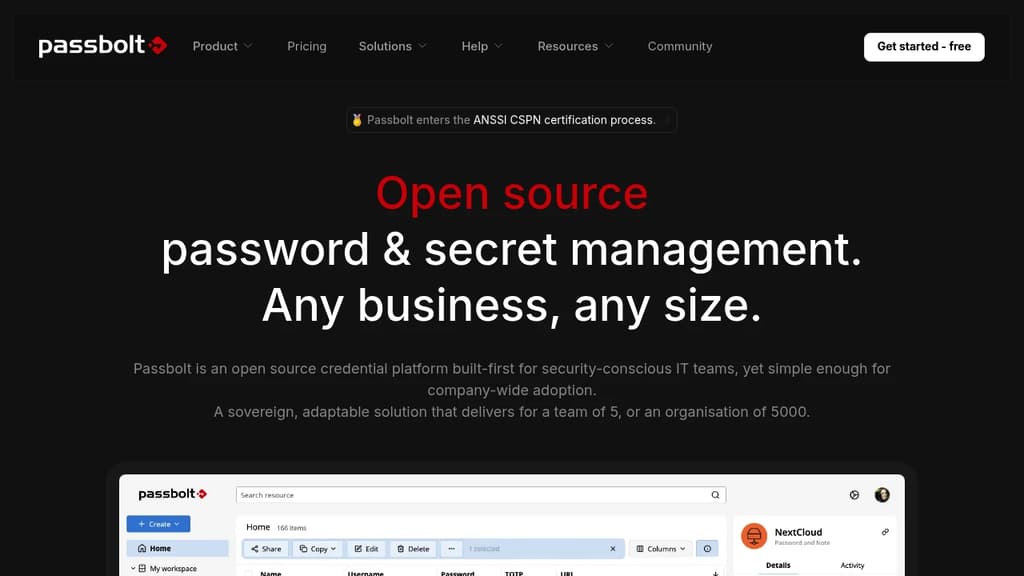
Passbolt 4.9 brings significant improvements to performance and search efficiency:
- Enhanced search functionality for faster and more accurate results when looking up passwords and other sensitive data
- Optimized database queries and caching to improve overall system responsiveness, especially for large organizations with many users and credentials
- Improved indexing to speed up searches across large password repositories
- New filtering options to quickly narrow down search results
- Performance enhancements to the browser extension for smoother user experience
Key benefits:
- Faster access to needed credentials, improving productivity
- Reduced system load and resource usage
- Better scalability for growing organizations
- Improved user experience with snappier performance
Passbolt continues to focus on being a security-first, open source password manager built for team collaboration. It offers:
- End-to-end encryption and user-owned encryption keys
- Self-hosting option for full control over data
- Granular sharing and access controls
- Audit logs and advanced security features
- Browser extensions and mobile apps for easy access
- API and CLI for developer workflows and automation
- 100% open source code for transparency and auditability
As an EU-based company, Passbolt also emphasizes privacy compliance and data protection.

Collaborative password manager with folder-level access control, AES-256-GCM encryption, governance tools, and Linux password rotation, runs on your own servers.
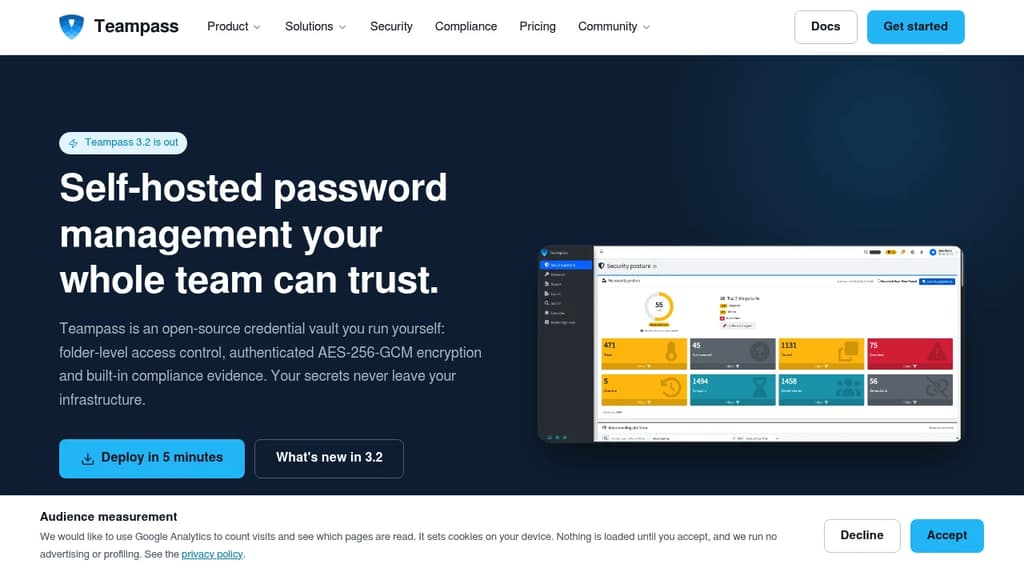
Teampass is a self-hosted password manager for teams, built for organizations that can't afford to hand their credentials to a third-party cloud. It's been maintained since 2009, runs on Docker or bare metal, and every security and governance feature ships in the free, GPL-3.0 server.
The access model centers on a folder tree. Roles carry preset rights, per-user overrides are available, and the same rules apply in the web interface and through the API. Personal folders are decryptable only by their owner and a designated recovery account.
Encryption is authenticated AES-256-GCM with random IVs, per-secret salts, 256-bit object keys, PBKDF2 at 600,000 iterations, and HKDF-SHA256 key derivation. Tampering is detected rather than silently decrypted. Existing vaults migrate lazily on first read, with no maintenance window required.
Key capabilities include:
- Security Posture Dashboard scores every user out of 100 and surfaces weak, reused, breached, and overdue credentials, with optional Have I Been Pwned checks
- Linux password rotation (LAPR) changes local account passwords over SSH, agentless, recording only passwords the target machine has already accepted
- Governance tools cover access recertification campaigns, rotation policy tracking, leaver risk detection, four-level data classification, and CSV evidence export for auditors
- Secure Send shares a credential outside the vault under an expiry, a view limit, and an optional passphrase
- Identity integration supports LDAP and Active Directory with nested groups, OAuth2 SSO, and configurable TOTP
- Migration imports from Bitwarden, KeePassXC, LastPass, 1Password, and CSV; exports to KeePass 2.x XML
- REST API with Bash and PowerShell clients for scripted credential delivery into pipelines
Teampass has been validated against GDPR, ISO 27001, and ISO 9001 requirements by real organizations. It's a practical fit for IT teams managing thousands of accounts, small charities that need internal control without cloud exposure, and regulated businesses that need audit evidence on demand.
The server is free with no seat limits. A paid browser extension (from €49/year) adds autofill, password capture, and domain matching across Chrome, Firefox, and Edge. Unlike tools such as Passbolt, there's no feature-gated enterprise edition, everything in the server is available to everyone running it.

Open-source password manager with end-to-end encryption for passwords, credit cards, notes, and documents. Cross-platform sync with secure sharing capabilities.
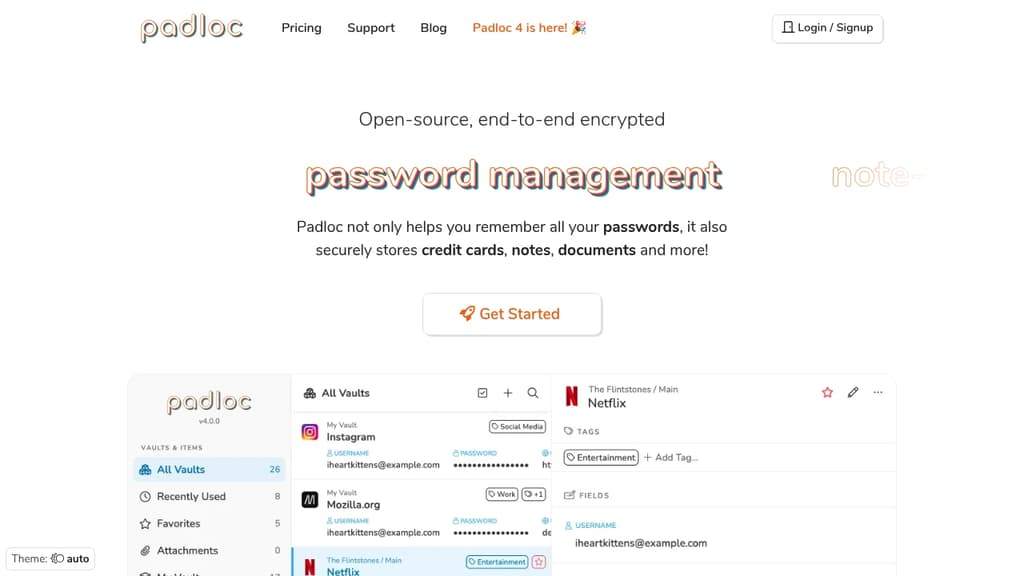
Padloc is a comprehensive security solution that goes beyond traditional password management. This open-source platform provides end-to-end encryption for all your sensitive data, ensuring complete privacy and security.
Key Features:
- Multi-format storage - Securely store passwords, credit cards, notes, documents, and license keys
- Cross-platform compatibility - Available on Windows, MacOS, iOS, Android, and major browsers
- Cloud synchronization - Access your encrypted data anywhere, anytime
- Secure sharing - Share sensitive information with family, friends, or colleagues safely
- Open-source transparency - Fully auditable code developed under open-source license
Security & Trust: Padloc has been independently audited by three different security expert groups, providing additional assurance of its reliability. The end-to-end encryption means that even Padloc cannot access your data - only you hold the keys.
Perfect for personal use, families, teams, and businesses looking for a trustworthy solution to manage and share sensitive information securely across all devices.

Open-source personal cloud that automatically gathers all your data from third-party services. French-hosted with privacy-first design, no ads, and seamless device sync.
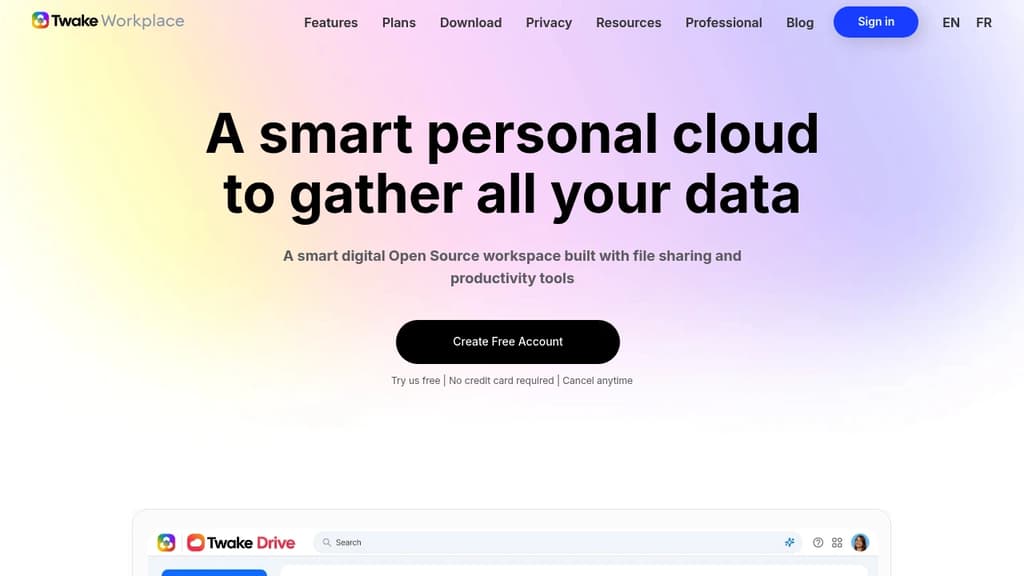
Take complete control of your digital life with a privacy-first personal cloud that automatically imports and organizes all your data from third-party services. This French-made solution combines the convenience of major cloud providers with the security and control you deserve.
Automatic data gathering pulls in bills, bank statements, receipts, health reimbursements, and payslips without manual effort. Your documents sync seamlessly across all devices - PC, smartphone, and tablet - eliminating tedious manual transfers.
Built-in tools include a secure note-taking system for private collaboration, and an integrated password manager that remembers and syncs all your credentials with one-click login. Your data stays protected with French hosting at OVH, Europe's largest hosting company.
Key advantages include:
- Open-source transparency with no hidden algorithms
- Zero advertising - your data isn't the product
- Privacy by design with French data protection standards
- Flexible pricing starting with free storage options
- 4.7/5 rating from over 100,000 satisfied users
Unlike Silicon Valley alternatives, this solution puts your privacy first while delivering the same convenience and functionality. Perfect for individuals, families, and professionals who want complete data sovereignty without sacrificing usability.

Open source platform for engineering teams to manage secrets and environment variables from development to production, with powerful integrations.
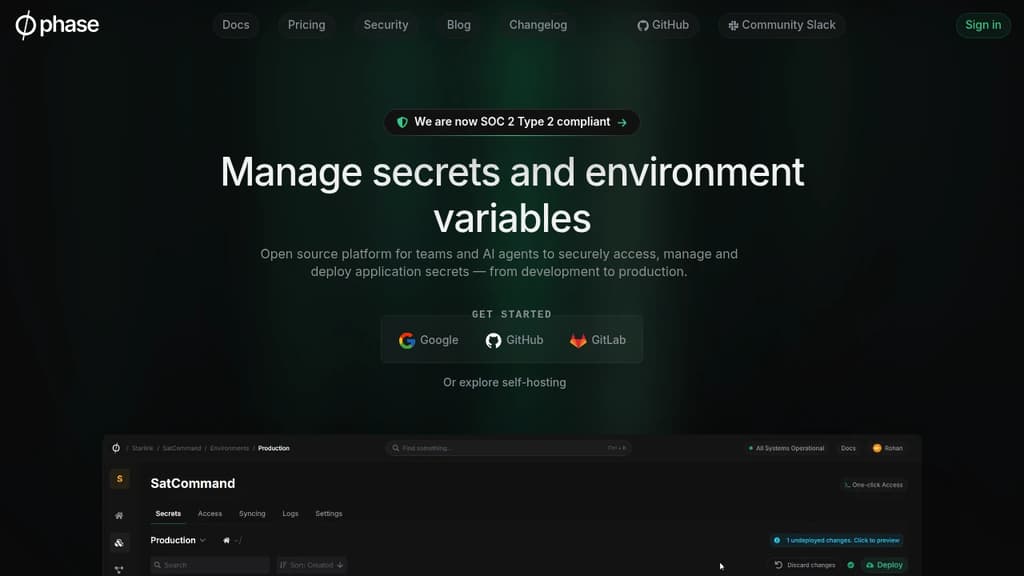
Phase revolutionizes secret management for fast-moving engineering teams. This open source platform seamlessly integrates into your development workflow, providing a secure and efficient way to handle application secrets throughout the entire lifecycle.
Key benefits include:
- Seamless Developer Experience: Manage secrets directly from your terminal, enhancing productivity without compromising security.
- Runtime Secret Injection: Effortlessly inject secrets into applications, containers, or runtimes as environment variables.
- Universal Compatibility: Works with any language or framework, requiring no code changes or additional dependencies.
- Centralized Management: Create a single source of truth for all your application secrets and configurations.
- Automated Deployments: Streamline critical tasks like secret rotation and keep deployments in sync automatically.
- Flexible Infrastructure Integration: Set up automatic secret syncing pipelines to your preferred platforms in seconds.
- Comprehensive Security Features: Enjoy audit logging, role-based access control, and IP allow listing out of the box.
- End-to-End Encryption: Utilize multiple layers of protection, including TLS and sharded private keys for maximum security.
- Powerful API & SDKs: Build custom workflows and integrate Phase into your existing tools and processes.
Whether you're a small startup or a large enterprise, Phase adapts to your needs, offering both cloud-hosted and self-hosted options to meet various compliance requirements.

Secure secret management platform with public key encryption, automated rotation, versioning, and real-time collaboration tools for development teams.
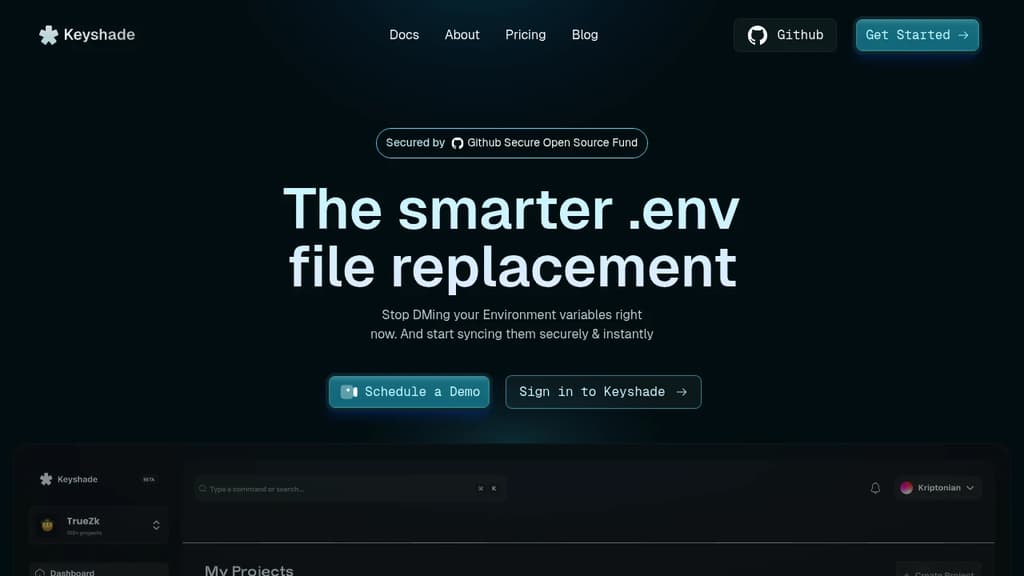
A comprehensive secret management platform that replaces traditional .env files with secure, real-time synchronization across your entire development workflow. Built with public key encryption at its core, keyshade ensures your sensitive credentials remain protected while enabling seamless collaboration.
Key Security Features:
- Automated secret rotation protocols to safeguard credentials
- Public key encryption for secure secret sharing across infrastructure
- Role-based access control with granular permissions
- Real-time auditing and alerting for complete visibility
Developer-Friendly Tools:
- Secret Management Kit (SMK) for direct environment integration
- Command Line Interface supporting multiple operating systems
- Import/export capabilities from external platforms
- Workspace snapshots for easy restoration and backup
Team Collaboration:
- Webhook alerts for real-time notifications
- Custom roles with fine-tuned permissions
- Discussion and notes for collaborative secret management
- Approval workflows with validation layers before commits
Transform how your team handles sensitive configuration data with versioning support, seamless platform integrations, and instant synchronization that fits naturally into your existing codebase and development processes.

Open-source password manager with peer-to-peer syncing, local storage, and end-to-end encryption. No cloud servers, complete privacy control across devices.
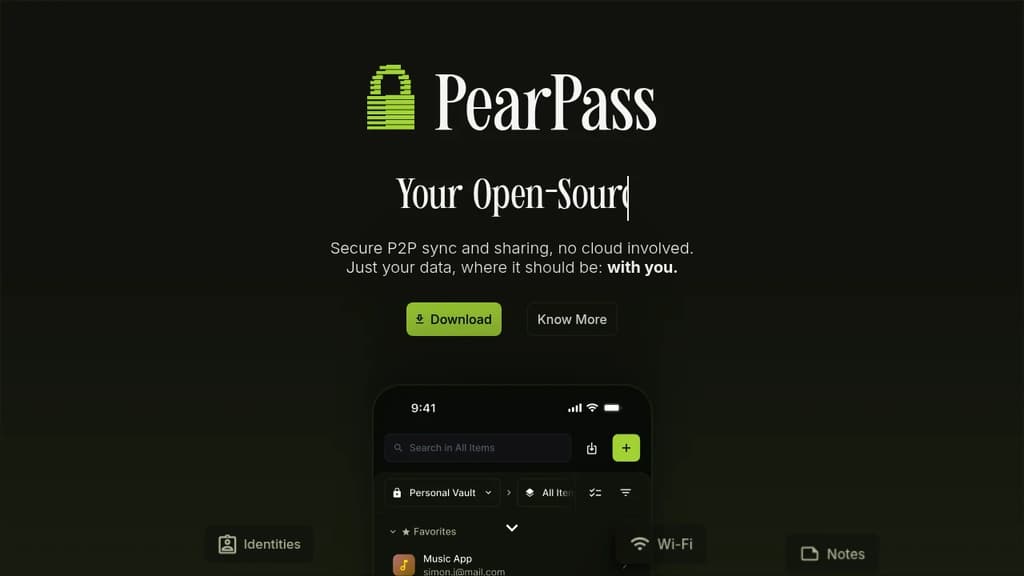
Complete control over your passwords with zero cloud dependency. PearPass is an open-source password manager that stores credentials exclusively on your devices, eliminating server vulnerabilities and maximizing privacy.
Key benefits include:
- Local-first storage - Your passwords never leave your control or touch external servers
- Peer-to-peer syncing - Seamlessly sync across devices without compromising privacy
- Robust encryption - End-to-end encryption using Libsodium cryptographic primitives
- Security audited - Independently reviewed by Secfault Security for cryptographic integrity
- Built-in password generator - Create complex, secure passwords instantly
- Lightweight design - Easy installation and intuitive interface for effortless password management
Perfect for privacy-conscious users who want enterprise-grade security without surrendering data control. The open-source architecture ensures transparency and customization while maintaining the highest security standards through proven cryptographic methods.

Shelve is a comprehensive project management tool designed to streamline workflows and enhance collaboration for developers and teams.
Shelve is a powerful project management tool that revolutionizes the way developers and teams work together. With its intuitive interface and robust features, Shelve simplifies project creation, management, and collaboration.
Key Features:
- Seamless Environment Management: Push and pull environment variables instantly across your entire team, eliminating configuration hassles.
- Powerful CLI Experience: Manage your projects efficiently with simple yet powerful command-line interface commands.
- Built for Teams: Easily manage multiple teams, control access levels, and collaborate effortlessly.
- Native Monorepo Support: Automatically detect and manage configurations across all your projects in monorepos.
- GitHub Integration: Sync your environment variables directly with GitHub Secrets for secure GitHub Actions workflows.
- Self-Hosting Ready: Deploy Shelve on your own infrastructure with Docker or through NuxtHub for full control of your data.
Why Choose Shelve:
- Increased Productivity: Automate your workflow and focus on what matters most - writing code.
- Enhanced Collaboration: Work seamlessly with your team, sharing project secrets, data, and files in one secure place.
- Flexibility: Whether you're working solo or in a large organization, Shelve adapts to your needs.
- Security: Keep your project secrets and sensitive data safe with robust security features.
Shelve is more than just a project management tool - it's a complete developer workspace that empowers you to build, manage, and scale your projects with ease.

Team-focused password manager with client-side encryption, SAML, LDAP, audit logs, and compliance policies. Self-host on your own servers or use as SaaS.
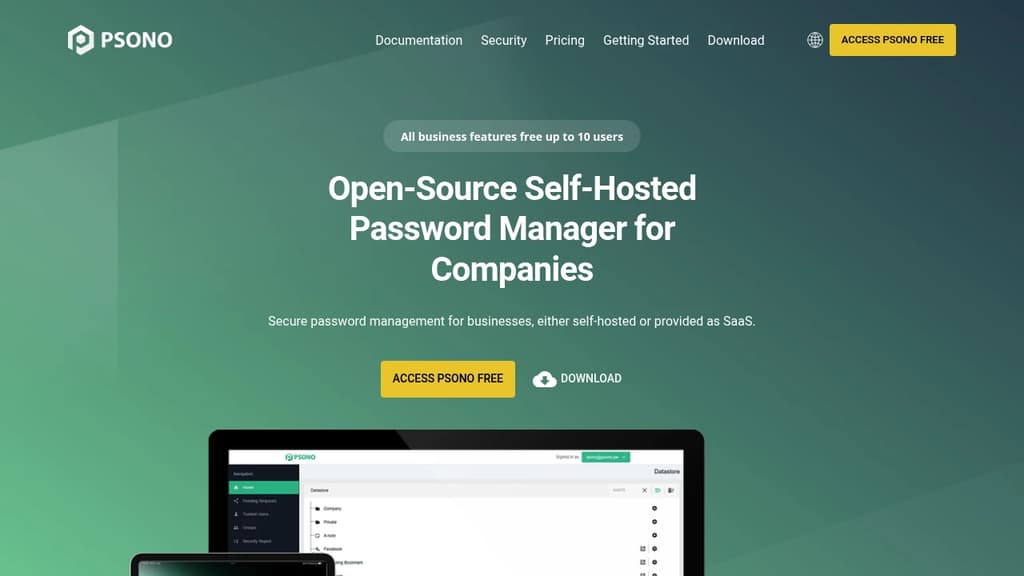
Psono is a self-hosted password manager built specifically for organizations that need control over where their credentials live. Instead of trusting a third-party cloud vault, you run the server yourself, keeping encrypted data behind your own firewalls. It's also available as a managed SaaS option if you'd rather skip the infrastructure work.
Vault data is encrypted on the client before it ever reaches the server. That means even if someone gains access to the server, they get ciphertext, not credentials. Encryption happens at multiple layers: client-side, in transit, and at rest.
Key capabilities include:
- SAML and LDAP integration for connecting to existing identity providers and directory services
- Audit logs so you can track who accessed or changed what
- Compliance policies to enforce password rules across your organization
- Encrypted sharing lets teams share credentials without exposing plaintext
- Cross-platform access across Windows, macOS, Linux, iOS, and Android, with browser extensions for Chrome, Firefox, and Edge
- Admin client for centralized management of users, groups, and permissions
All business features are free for teams up to 10 users, which makes it practical for small organizations to evaluate it fully before committing. Larger teams can self-host without per-seat licensing pressure, or contact the team for supported SaaS plans with SLAs.
Compared to tools like Bitwarden or Passbolt, Psono leans heavily into enterprise compliance and directory integration out of the box. The fully auditable codebase means your security team can verify the encryption implementation rather than taking it on trust, which matters in regulated industries.
The source code is publicly available, and the architecture is designed so security doesn't depend on obscurity.

People are looking for alternatives to...
View all alternatives
Claude Code

Spotify

CapCut

Claude

Notion

Lovable
 Openlane – Open-source, developer-first platform for automated compliance, risk management, and built-in Trust Center.


 Sent
Sent