Open Source Comma Alternatives
A curated collection of the 6 best open source alternatives to Comma.
The best open source alternative to Comma is Ghost. If that doesn't suit you, we've compiled a ranked list of other open source Comma alternatives to help you find a suitable replacement. Other interesting open source alternatives to Comma are: Sigle, Nonograph, Zenblog, and Pagecord.
Comma alternatives are mainly Blogging Platforms but may also be Email Marketing & Newsletter Tools or Traditional & Flat-File CMS Tools. Browse these if you want a narrower list of alternatives or looking for a specific functionality of Comma.

Written by Piotr Kulpinski


Publish content, send email newsletters, and sell paid subscriptions from one platform. Used by independent journalists, creators, and businesses like YCombinator and Kickstarter.

Ghost is a publishing platform built for professional creators who want to run a content business without depending on third-party algorithms or platforms. It combines a website builder, email newsletter delivery, and membership management into one tool. Independent journalists, newsletters, and media companies use it to own their audience directly.
The editor is designed to stay out of the way. It supports rich media through embeds and content blocks: image galleries, video, audio, downloadable files, bookmarks, accordion toggles, and more. Posts can be published to the web and delivered by email simultaneously, with audience segmentation so you can send different newsletters to different subscriber groups.
Memberships are built in from the start:
- Free signups turn anonymous visitors into logged-in members via native signup forms
- Paid subscriptions support monthly and yearly tiers, processed through Stripe with no platform fees taken by Ghost
- Offers and promotions let you run discounts to grow your subscriber base
- Analytics show engagement data, content performance, and who your most active readers are
For site design, Ghost supports custom themes and a marketplace with hundreds of options. Your branding stays front and center. It integrates with tools like Zapier, Slack, Discord, Google Analytics, Plausible, Mailchimp, ActiveCampaign, and many others.
Ghost is self-hostable or available as a managed service. It's structured as an independent nonprofit funded entirely by its users, with no outside investors. Publications on Ghost collectively generate over $100 million in revenue annually. If you're moving away from WordPress or looking for a Beehiiv alternative, Ghost covers both the website and newsletter sides without needing separate tools.

Sigle is a secure, open-source platform for Web3 writers to create, publish, and monetize content on the Bitcoin blockchain.
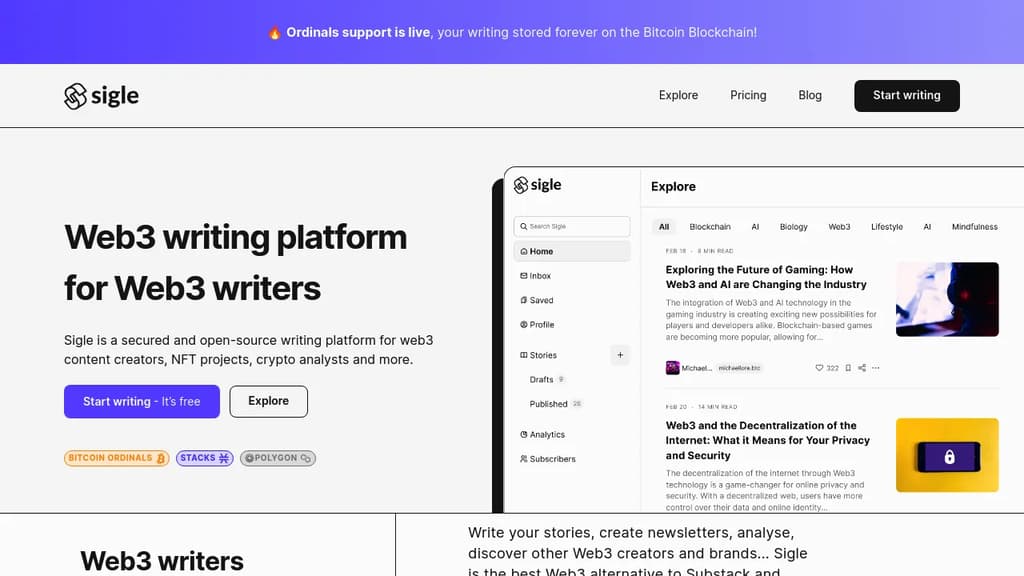
Sigle is a revolutionary Web3 writing platform designed for content creators, NFT projects, and crypto analysts. Built on the Bitcoin blockchain, it offers a secure and decentralized environment for writers to thrive in the Web3 ecosystem.
Key Features:
- Bitcoin Ordinals Support: Store your writing permanently on the Bitcoin blockchain, ensuring longevity and immutability of your content.
- Decentralized Publishing: Enjoy complete ownership and control over your content, free from censorship or platform-specific restrictions.
- Monetization Options: Create NFT-gated content or integrate with Unlock Protocol for subscription-based models.
- Custom Domains: Establish your unique online presence with SEO-optimized custom domains.
- Newsletter Integration: Build and engage your audience through integrated newsletter functionality.
- Analytics: Gain insights into your readership and content performance with privacy-focused analytics.
Sigle empowers writers with a user-friendly interface, powerful editor, and essential tools for community building. Whether you're a Web3 enthusiast, NFT project creator, or crypto analyst, Sigle provides the perfect platform to share your insights, grow your audience, and monetize your expertise in the decentralized web.
With its commitment to open-source development and data privacy, Sigle stands out as a truly Web3-native solution for content creators looking to embrace the future of online publishing.

Self-hosted platform for publishing text anonymously. Write, get a link, share it. No accounts, no tracking, no edits after posting.
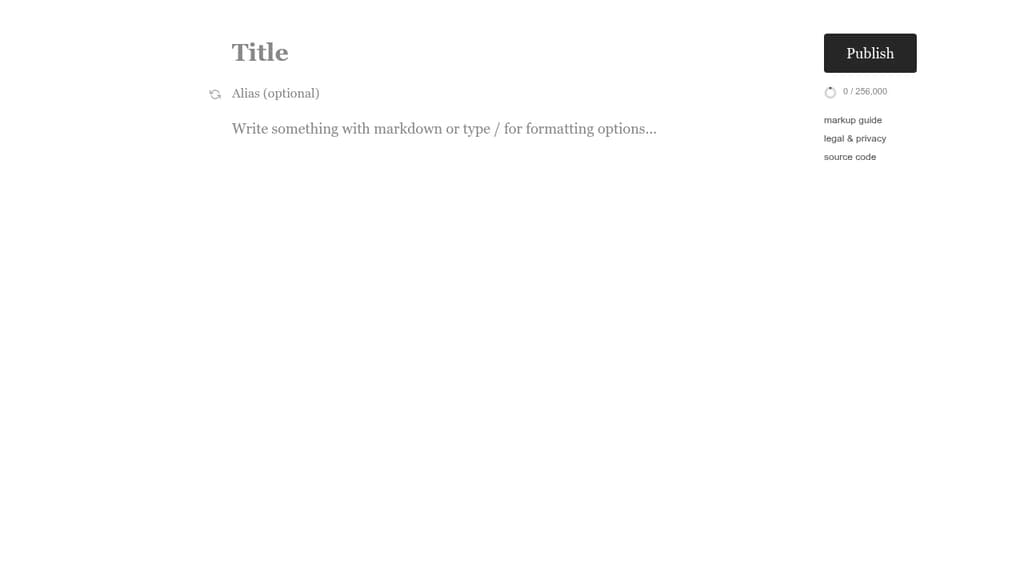
Nonograph is a bare-bones anonymous publishing platform for anyone who wants their words to exist online without being tied to an identity. You write, you get a shareable link, and that's it. No account creation, no profile, no analytics trail following readers around.
It's built around a few hard constraints that shape the whole experience:
- No accounts, nothing to sign up for, nothing to log into
- No tracking or analytics, neither writers nor readers are monitored
- No edits or deletions, once published, a post is permanent
- Plaintext storage, posts are stored as markup, not locked into proprietary formats
- 256,000 character limit, plenty of room for essays, notes, or long-form writing
Formatting works through Markdown directly, or via a / menu for those who prefer a guided approach. Appending .md to any post URL reveals the raw source, which keeps things transparent and portable.
The permanence-by-design approach makes it a different choice from platforms like Posthaven, where posts can be managed and updated. Nonograph treats publishing as a one-way door. That constraint is the point: it removes the temptation to self-censor after the fact, and it means there's no moderation surface tied to your identity.
Because it's self-hostable and lightweight, running your own instance is straightforward. The codebase is intentionally simple, which keeps long-term maintenance low. No investors, no monetization, no ads mean the project has no financial pressure to change what it is.

A minimalist, markdown-based blogging platform designed for developers, featuring syntax highlighting and seamless Git integration.
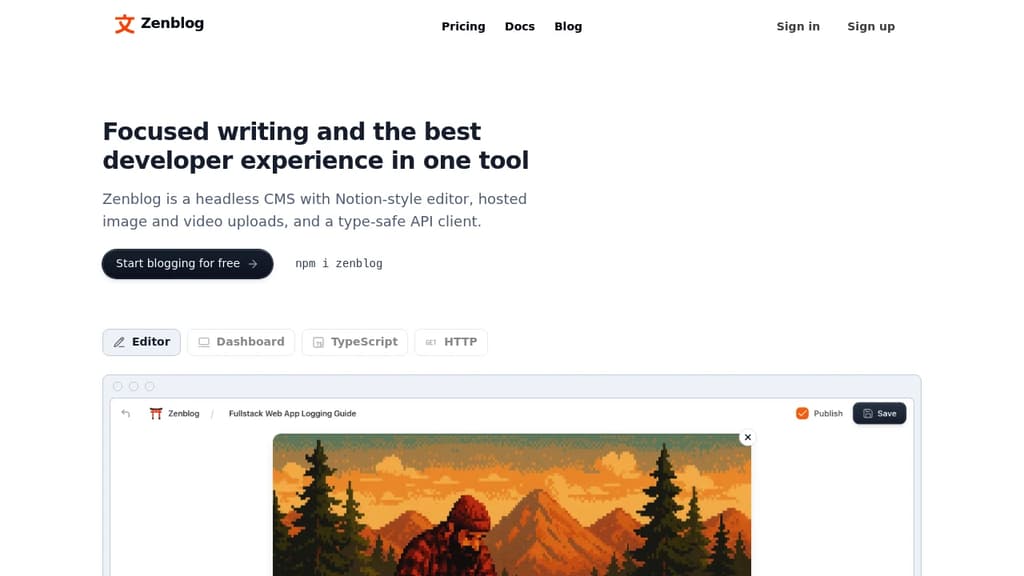
Zenblog is the ultimate blogging solution for developers and tech enthusiasts who value simplicity, efficiency, and powerful features. This lightweight platform combines the ease of markdown writing with the robustness of a full-fledged blogging system.
Key benefits of Zenblog include:
- Markdown-first approach: Write your posts in pure markdown, allowing you to focus on content creation without distractions.
- Syntax highlighting: Showcase your code snippets with beautiful, customizable syntax highlighting for over 100 programming languages.
- Git integration: Seamlessly sync your blog with your Git repository, enabling version control and collaborative writing.
- Responsive design: Ensure your blog looks great on all devices with a mobile-friendly, customizable theme.
- Fast and lightweight: Enjoy blazing-fast page loads and optimal performance, thanks to Zenblog's efficient architecture.
- SEO-friendly: Boost your blog's visibility with built-in SEO optimization features.
- Custom domains: Use your own domain name to establish a unique online presence.
- Analytics integration: Gain insights into your audience with easy integration of popular analytics tools.
Whether you're a seasoned developer sharing technical insights or a tech enthusiast documenting your learning journey, Zenblog provides the perfect platform to express your ideas and connect with your audience. Experience the zen of blogging with Zenblog – where simplicity meets functionality.

Publish blog posts by email, from Obsidian, iA Writer, the web editor, CLI, or API. Includes RSS, email subscribers, analytics, custom domains, and full export.
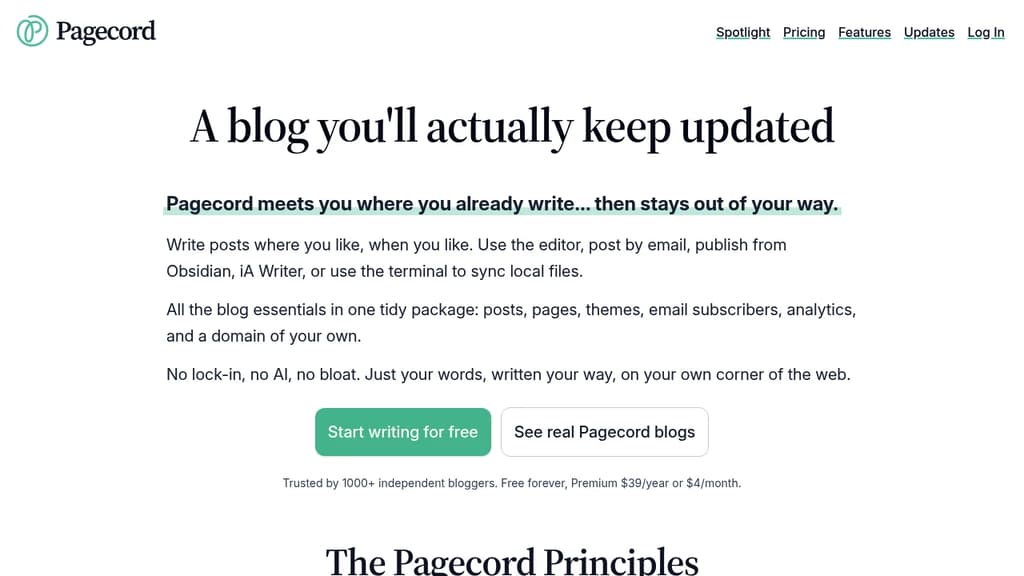
Pagecord is a personal blogging platform built around one idea: removing friction between the urge to write and a published post. It doesn't force you into a new workflow. You can write in the browser, send an email to your private Pagecord address, publish from Obsidian or iA Writer, or push posts from the terminal using the CLI or API.
The free tier covers the basics well. Unlimited posts and pages, a choice of themes, tags, RSS, media embeds (YouTube, Spotify, Bandcamp, GitHub auto-embed), full site export in HTML or Markdown, and a built-in rich text editor. No time limits, no post caps.
Premium ($39/year or $4/month) adds the features that make a blog feel like a real home on the web:
- Custom domain with one-click setup
- Email newsletter with weekly digest or per-post delivery, up to 250 subscribers
- Privacy-respecting analytics built in, no third-party tracking scripts
- Image hosting for posts and galleries, including email attachments
- Custom CSS for styling beyond the built-in themes
- Reply by email so readers can respond without your address being exposed
- Obsidian plugin, iA Writer support, API, and Shortcuts integration
- Two blogs from a single account
Exporting your entire site (including images) in HTML or Markdown is available to everyone, not just paying users. There's no lock-in by design.
Pagecord is open source and self-hostable, bootstrapped and profitable, and built with semantic HTML, RSS, and Micropub rather than heavy JavaScript frameworks. It's a deliberate contrast to bloated publishing platforms and newsletter engines like Ghost or tools like Zenblog that take a narrower approach.
It's used by 1,000+ independent bloggers who want a permanent, personal corner of the web without the overhead of managing a CMS.

Self-hostable blogging platform with a clean editor, zero-config SEO, custom themes, real-time collaboration, and built-in comments and newsletters.
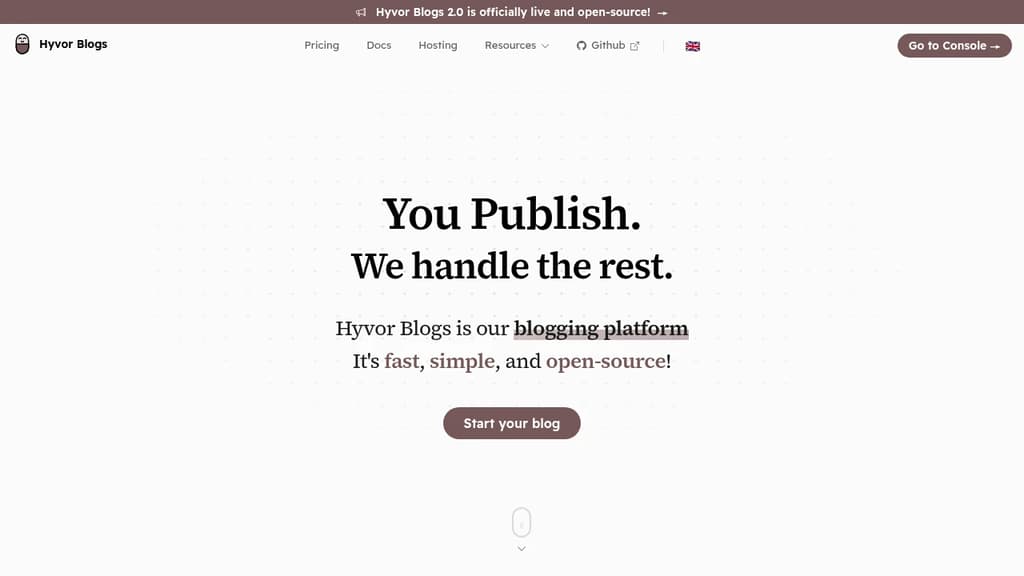
Hyvor Blogs is a blogging platform designed for publishers who want speed and simplicity without plugin sprawl. It covers everything in one package: writing, SEO, theming, comments, newsletters, and developer APIs. No hunting for add-ons, no surprise charges.
The editor handles all the standard formatting alongside images (upload, paste, drag-and-drop, Unsplash), embeds from 1,000+ platforms, syntax-highlighted code blocks for 100+ languages, and markdown shortcuts. Drafts and post scheduling are built in.
Hosting is flexible. You can publish on a custom domain with a free TLS certificate, serve your blog from a sub-directory inside an existing site using Cloudflare Workers or Docker, or go fully headless and use the Data API with any frontend framework. Next.js, Laravel, and Symfony integrations are available for sub-directory setups.
Key capabilities at a glance:
- SEO out of the box: meta tags, Open Graph, Twitter Cards, auto-generated sitemaps, robots.txt, canonical URLs, and an in-built link analyzer that flags broken links on a recurring schedule
- Performance: static HTML output with no JS bloat, automatic WebP image conversion, and extensive caching
- Themes: choose from open-source themes or build your own with HTML and CSS; full theme API and docs included
- Real-time collaboration: live cursors and suggestion mode so teammates can propose edits without overwriting the draft
- Multi-language: RTL support, automatic hreflang and i18n routing, AI-assisted translation, and per-language post management
- Comments and newsletters: every plan includes complimentary access to Hyvor Post for newsletters, all managed from one dashboard
- Developer APIs: REST Data API, Console API, Delivery API for sub-directory hosting, and webhooks
For teams migrating away from WordPress or Ghost, Hyvor Blogs removes the maintenance overhead while keeping the flexibility publishers actually need. You can export everything in one click, self-host on your own server, and there are no ads or third-party trackers added to your blog.
The platform is GDPR and CCPA compliant, supports SSO, and targets 99.9% uptime with priority support on higher plans.

People are looking for alternatives to...
View all alternatives
Spotify

Claude Code

CapCut

Claude
Notion

Lovable
 Sent – Messaging Infrastructure for Developers. One API for SMS, WhatsApp, and RCS across 190+ countries.
 Sent
Sent