Chalk.ist vs Ray.so
Learn how Chalk.ist and Ray.so differ in their key features, development activity, technology
stack and community adoption, so you can decide which of these code snippet stylers is best for you.
Learn how Chalk.ist and Ray.so differ in their key features, development activity, technology stack and community adoption, so you can decide which of these code snippet stylers is best for you.

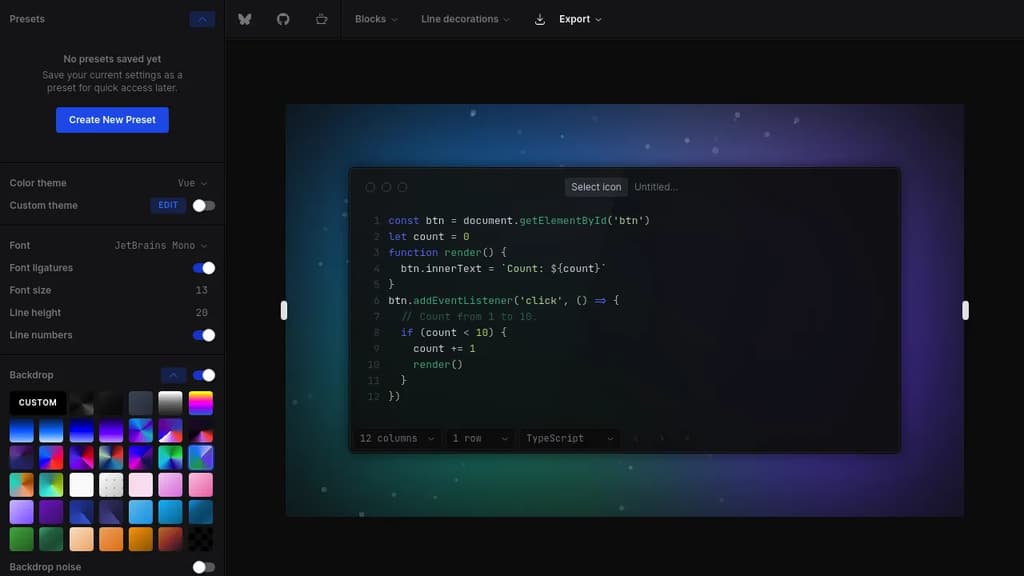
Chalk.ist
Last 30 days
Last commit
11 months agoRepository age
5 yearsLicense
MITRepository
idered/chalk.ist

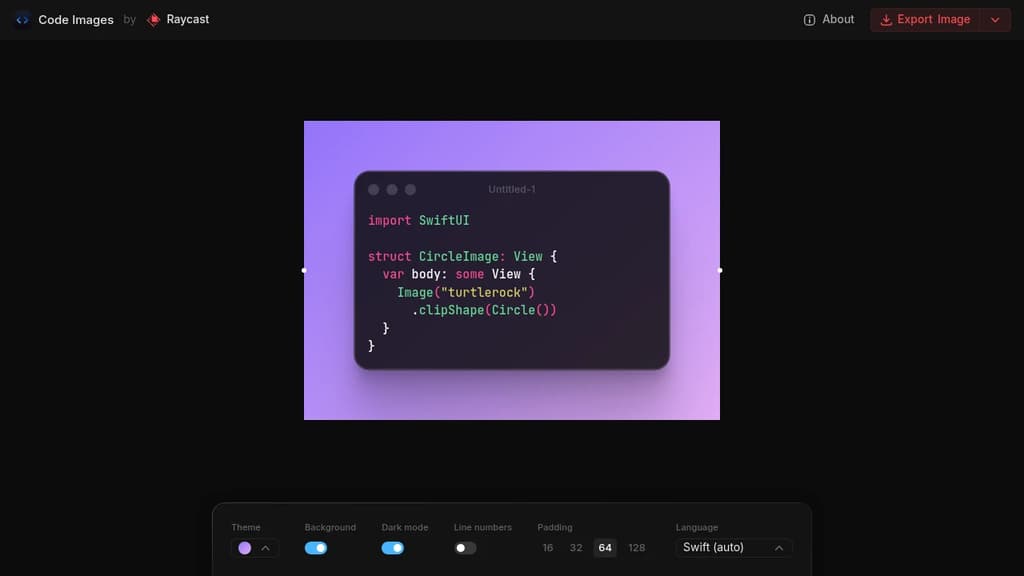
Ray.so
Last 30 days
Last commit
1 day agoRepository age
4 yearsLicense
MITRepository
raycast/ray-so
Detailed Comparison
Ray.so appears to have several advantages over Chalk.ist, particularly in growth and activity. Consider your specific needs regarding popularity, growth, activity, technology, maturity, licensing and features when making your decision.
Ray.so appears to have several advantages over Chalk.ist, particularly in growth and activity. Consider your specific needs regarding popularity, growth, activity, technology, maturity, licensing and features when making your decision.
Community & Popularity
Both tools have similar popularity levels, with Chalk.ist having 1,844 stars and Ray.so having 2,379 stars on GitHub. In terms of developer contributions, Ray.so has 355 forks, indicating moderate developer engagement.
Growth Momentum
Ray.so is growing faster, adding 13 stars in the last 30 days (+0.5%) against losing 2 stars for Chalk.ist (-0.1%). Ray.so is both larger and pulling further ahead.
Development Activity
Ray.so shows more recent development activity with its last commit 1 day ago, while Chalk.ist was last updated 11 months ago. This suggests Ray.so is being more actively maintained.
Technology Stack
Both tools share common technology foundations, being built with JavaScript, CSS, Typescript. However, they differ in their additional technology choices: Chalk.ist uses Vue, Nuxt.js while Ray.so leverages JSX, Next.js.
Project Maturity
Both projects started around the same time, with Chalk.ist beginning 5 years ago and Ray.so 4 years ago.
Licensing
Both projects use the MIT license, providing identical terms for usage and distribution.
Use Cases & Features
Both tools serve similar use cases in Code Snippet Stylers.
 c15t – Open-source cookie banner, built for control and lightening fast modern web apps.