Open Source Gleap Alternatives
A curated collection of the 2 best open source alternatives to Gleap.
The best open source alternative to Gleap is ShipShipShip. If that doesn't suit you, we've compiled a ranked list of other open source Gleap alternatives to help you find a suitable replacement. Other interesting open source alternative to Gleap is BugPin.
Gleap alternatives are mainly Project Management Suites but may also be Changelog Generators or Feedback & Feature Request Management Tools. Browse these if you want a narrower list of alternatives or looking for a specific functionality of Gleap.

Written by Piotr Kulpinski


Self-hostable changelog and roadmap platform with community voting, automated newsletters, and kanban boards. Deploy with Docker in minutes.
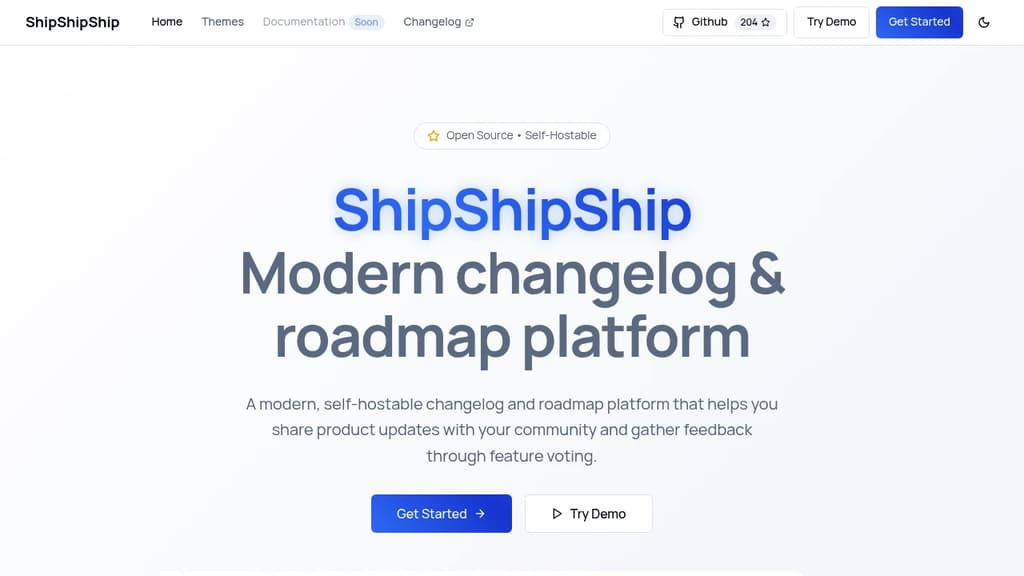
ShipShipShip is an open-source, self-hostable changelog and roadmap platform designed for teams who want complete control over their product communication. Built with modern technology, it offers a comprehensive solution for sharing updates and gathering community feedback.
Key Features:
- Kanban Roadmap: Drag-and-drop board with multiple event statuses for visual project management
- Community Voting: Let users vote on upcoming features and gather valuable feedback
- Newsletter System: Automated email updates about new features and releases
- Developer Friendly: RESTful API, Docker deployment, and modern tech stack
- Self-Hostable: Complete control over your data and infrastructure
- Highly Customizable: Modify themes, layouts, and features to match your brand
Quick Setup: Deploy with Docker in just minutes using a single command. No complex configuration required - perfect for teams who want to get started immediately.
As a brand new project, ShipShipShip welcomes early adopters and values genuine feedback to shape its future development. The platform combines the essential tools needed for effective product communication in one cohesive solution.

Embeds a lightweight widget into web apps so users can capture screenshots, annotate issues, and submit reports with console logs and browser metadata included.
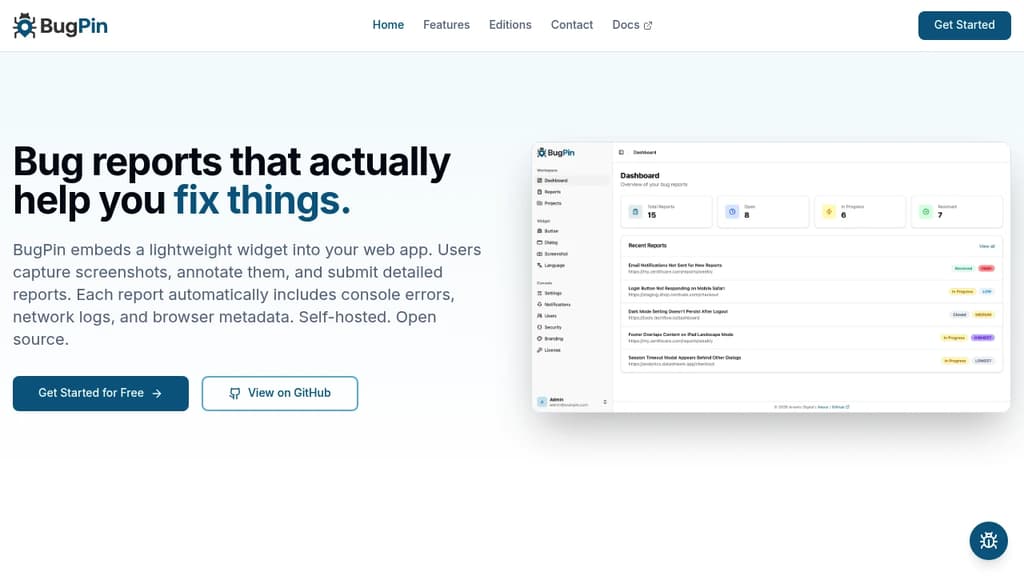
BugPin is a self-hosted bug reporting tool built for web teams who want detailed, visual reports without sending data to a third-party cloud. It embeds a small widget directly into your web app, letting users capture screenshots, annotate them, and submit reports in seconds. Each submission automatically bundles console errors, network logs, and browser metadata, so developers get real context instead of vague descriptions.
The widget is under 150KB gzipped, loads asynchronously, and uses Shadow DOM for complete style isolation. It won't conflict with your app's styles or slow down page load.
Key capabilities:
- Screenshot capture of the full page or visible area, triggered directly from the widget
- Annotation tools including pen, rectangle, circle, arrow, text, and a privacy blur for masking sensitive content
- Automatic metadata attached to every report: console errors, network logs, browser info, and the page URL
- Offline support that caches reports locally and submits them automatically when connectivity returns
- Single script tag integration with customizable widget appearance and webhook support
- SQLite database and Docker deployment, no external dependencies needed
BugPin stores everything on your own servers. There's no per-seat pricing, no usage caps, and no data leaving your infrastructure. The Community Edition is free forever and covers the core feature set. Enterprise adds SSO, webhooks, and white-label branding for teams that need them.
For teams already tracking errors with tools like Bugsink or looking for a self-hosted alternative to Gleap, BugPin fills a specific gap: visual, user-submitted reports with enough technical detail to act on immediately.

People are looking for alternatives to...
View all alternatives
Claude Code

Spotify

CapCut

Claude

Notion

Lovable
 Sent – Messaging Infrastructure for Developers. One API for SMS, WhatsApp, and RCS across 190+ countries.
 Stellar Hosted