Open Source Automatisch Alternatives
A curated collection of the 6 best open source alternatives to Automatisch.
The best open source alternative to Automatisch is n8n. If that doesn't suit you, we've compiled a ranked list of other open source Automatisch alternatives to help you find a suitable replacement. Other interesting open source alternatives to Automatisch are: ActivePieces, Windmill, Hook0, and ByteChef.
Automatisch alternatives are mainly Workflow Automation Tools but may also be Low-Code/No-Code Platforms or API Integration Tools. Browse these if you want a narrower list of alternatives or looking for a specific functionality of Automatisch.

Written by Piotr Kulpinski


Build automated workflows connecting 500+ apps, write custom code, and deploy AI agents with full visibility into every decision. Self-hostable or cloud.
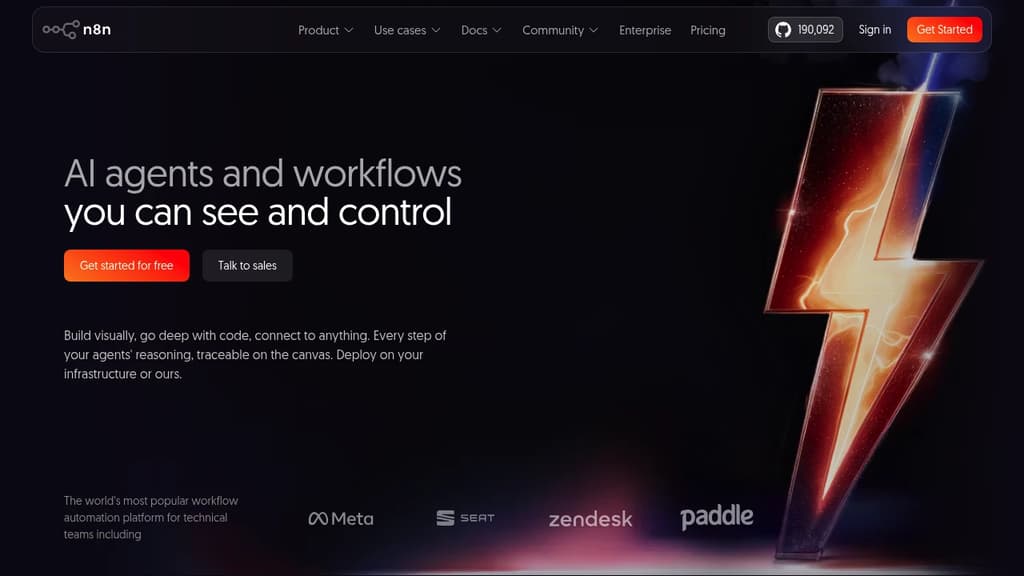
n8n is a workflow automation platform built for technical teams who find no-code tools too limiting but want something faster than building integrations from scratch. It sits in the middle: a visual canvas for building workflows, with the option to drop into JavaScript or Python at any step. That combination is what separates it from tools that force you to pick one or the other.
The platform connects to over 500 apps through pre-built nodes, with custom API support for anything not covered. Common use cases include onboarding automation, security incident enrichment, converting natural language into API calls, and generating customer insights from reviews. IT ops, SecOps, DevOps, and sales teams all show up in the documented use cases.
The AI agent capabilities are a significant part of what n8n has become. You can connect any AI model, including cloud or offline options, and build multi-agent setups and RAG systems. Every reasoning step is visible on the canvas, which matters when you need to audit what an agent actually did. Human-in-the-loop approvals can be inserted at any point, and structured inputs and outputs let you control exactly what data flows to and from AI steps.
Debugging is handled more practically than most tools. You can re-run a single step without replaying the entire workflow, mock external data to avoid waiting on third-party systems, and view logs without excessive clicking. AI workflows can be tested against real data before going to production.
Self-hosting is a first-class option. Full source code is available on GitHub, Docker deployment is supported, and the on-prem path includes SSO with SAML and LDAP, encrypted secret stores, RBAC permissions, audit logs, and Git-based version control. Teams that prefer not to manage infrastructure can use the hosted cloud version instead. If you're evaluating alternatives to n8n, options like ByteChef and Nango cover different parts of the integration and automation space.

Open-source integration platform for seamless workflow automation. Connect apps, automate tasks, and boost productivity effortlessly.
ActivePieces is a powerful, open-source integration platform that empowers users to automate their workflows without writing a single line of code. This versatile tool bridges the gap between various applications and services, enabling seamless connectivity and task automation.
Key benefits of ActivePieces include:
- No-Code Simplicity: Build complex workflows using an intuitive drag-and-drop interface, making automation accessible to users of all technical levels.
- Extensive App Integrations: Connect with popular services like Slack, Google Workspace, Trello, and many more to streamline your daily operations.
- Customizable Triggers: Set up automated actions based on specific events or schedules, ensuring your workflows respond dynamically to your needs.
- Open-Source Flexibility: Benefit from community-driven development, transparency, and the ability to self-host for complete control over your data.
- Time and Resource Savings: Eliminate repetitive tasks and reduce human error, allowing your team to focus on high-value activities.
- Scalable Solutions: Whether you're a small business or a large enterprise, ActivePieces adapts to your growing automation needs.
With ActivePieces, you can create powerful automations that sync data between apps, send notifications, update records, and much more. Its user-friendly interface and robust capabilities make it an ideal choice for businesses looking to optimize their processes and boost overall productivity.

Powerful, self-hosted platform for building and running workflows, scripts, and apps with code-first approach and collaborative features.
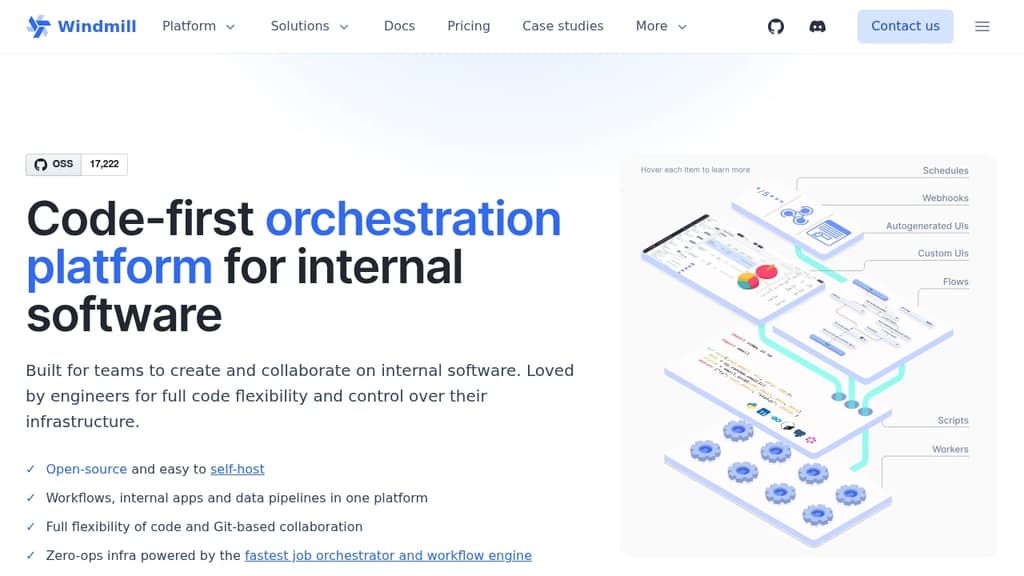
Windmill is a versatile, open-source workflow automation platform designed for developers who value flexibility and control. It offers a unique code-first approach, allowing you to create powerful workflows, scripts, and apps using your preferred programming languages.
Key benefits of Windmill include:
- Language Agnostic: Write in Python, Typescript, Go, Bash, or Deno, giving you the freedom to use the best tool for each task.
- Self-Hosted: Deploy Windmill on your own infrastructure, ensuring data privacy and compliance with your organization's security requirements.
- Collaborative Features: Work seamlessly with your team using built-in version control, approvals, and sharing capabilities.
- Resource Management: Easily manage credentials, environment variables, and resources across your workflows.
- Flexible Triggers: Schedule jobs, respond to webhooks, or integrate with external services to automate your processes.
- Visual Flow Editor: Combine scripts visually to create complex workflows, making it easy to understand and modify your automation.
- Extensible: Build custom apps and internal tools on top of your workflows, leveraging Windmill's powerful API and SDK.
Whether you're automating DevOps tasks, creating data pipelines, or building internal tools, Windmill provides the flexibility and power you need to streamline your development processes and boost productivity.

Self-hosted webhook solution for effortless event-driven communication between applications, enhancing system interoperability and automation.
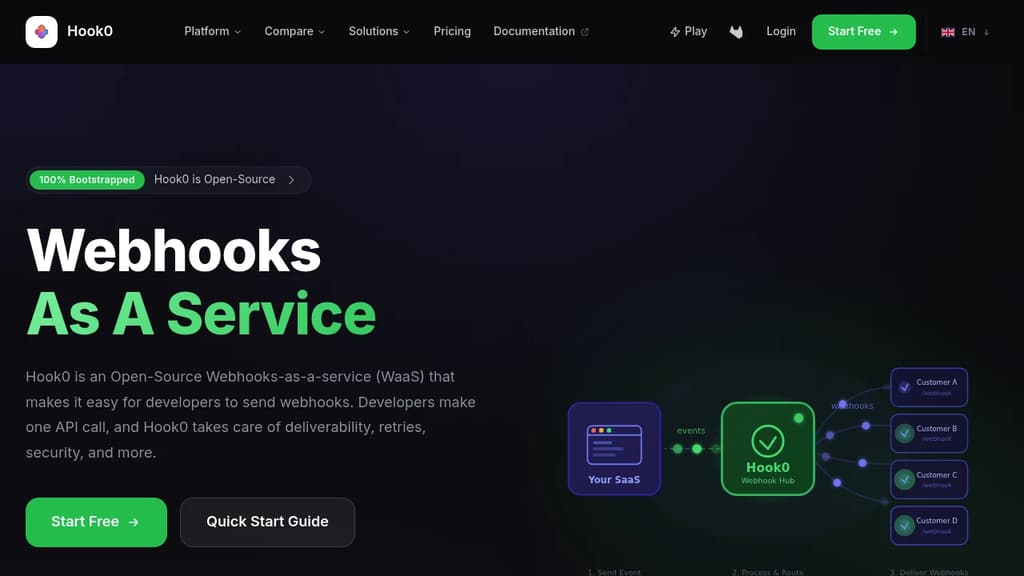
Hook0 is a powerful, open-source webhook management system designed to simplify and enhance communication between applications. By providing a robust infrastructure for event-driven integrations, Hook0 enables developers to create more responsive and interconnected software ecosystems.
Key benefits of Hook0 include:
-
Self-hosted control: Maintain full ownership of your data and infrastructure by hosting Hook0 on your own servers, ensuring privacy and compliance with data regulations.
-
Flexible integration: Easily connect various applications and services, allowing for real-time data exchange and automated workflows across your entire tech stack.
-
Scalable architecture: Built to handle high volumes of webhook events, Hook0 grows with your needs, from small projects to enterprise-level deployments.
-
Reliable delivery: Implement retry mechanisms and queue management to ensure that all webhook events are processed, even in case of temporary failures or downtime.
-
Comprehensive monitoring: Gain insights into your webhook traffic with detailed logs and analytics, helping you optimize performance and troubleshoot issues quickly.
-
Developer-friendly: With clear documentation and intuitive APIs, Hook0 makes it easy for developers to implement and manage webhooks in their applications.
-
Customizable security: Implement robust authentication and encryption measures to protect your webhook endpoints and ensure the integrity of your data.
By leveraging Hook0, development teams can focus on building core features while relying on a dependable webhook infrastructure to handle inter-application communication efficiently.

Create intelligent automation workflows combining AI agents with your favorite apps and services. Connect, automate, and scale your operations without complex coding.
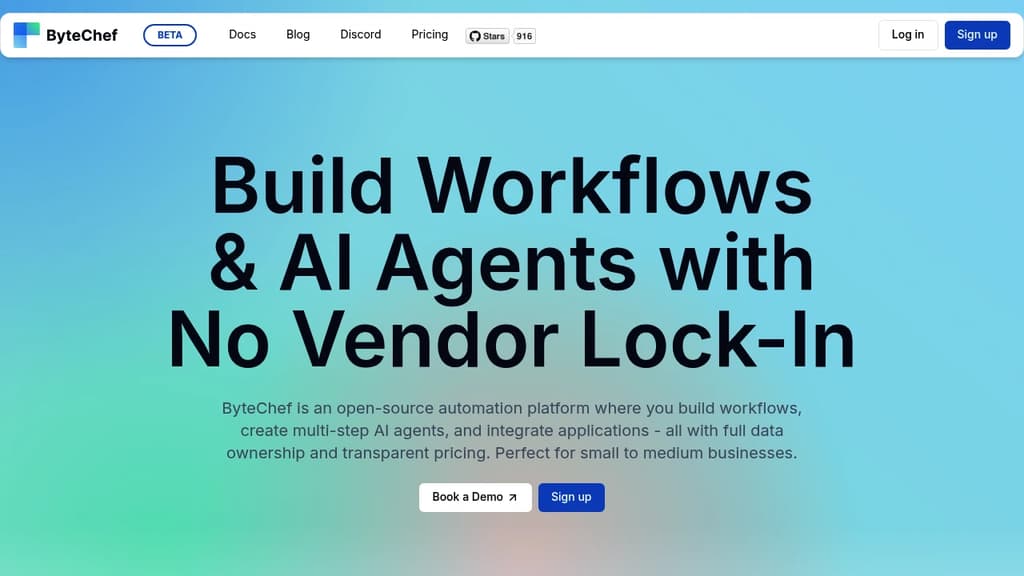
ByteChef is a versatile open-source automation platform that brings together AI capabilities and workflow automation in one powerful solution. The platform excels at creating sophisticated AI agents that can handle multi-step workflows while seamlessly integrating with popular SaaS applications and APIs.
Key features include:
- Support for multiple LLM providers including OpenAI, Groq, and self-hosted options
- Visual workflow builder with optional code customization
- Rich integration library with 20+ popular services like Slack, GitHub, and Salesforce
- Enterprise-grade security and performance capabilities
- Flexible deployment options (cloud or on-premise)
The platform bridges the gap between business teams and developers, offering both no-code visual tools and deep technical customization options. Whether you're building AI-powered chatbots, automating complex business processes, or creating custom integration workflows, ByteChef provides the flexibility and power to handle diverse automation needs.
Real users praise ByteChef for its ability to deliver enterprise-grade automation without complexity, enabling teams to connect applications in minutes and deploy AI-powered workflows in days instead of weeks. The open-source nature ensures continuous community-driven improvements while maintaining high security and compliance standards.

Open-source no-code automation platform for logistics, chatbots, and AI agents. Deploy on cloud, self-host, or hybrid with complete data sovereignty and modular workflow design.
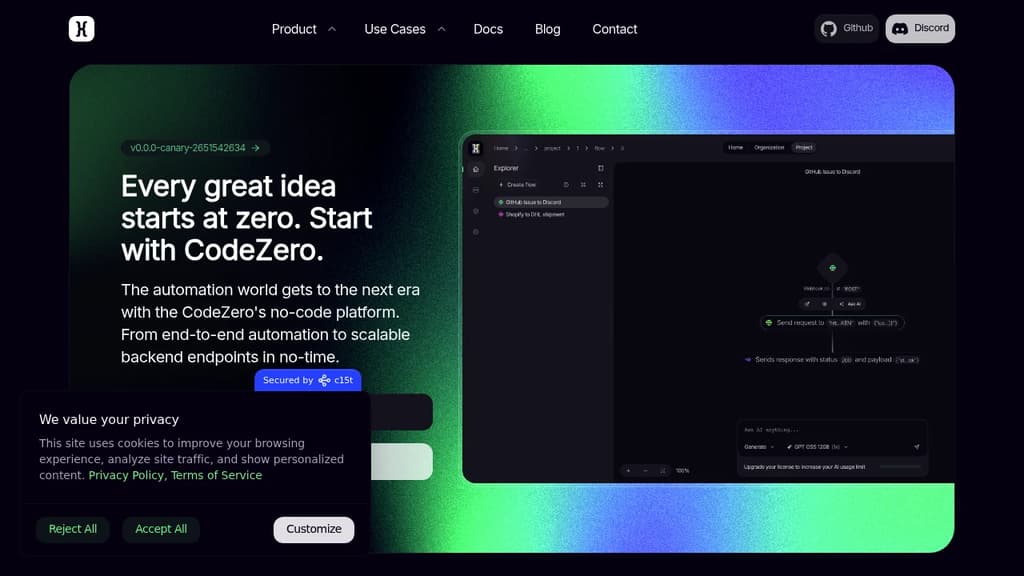
CodeZero is an open-source no-code automation platform that transforms how teams build and deploy complex workflows. Whether you're automating logistics operations, creating intelligent chatbots, or orchestrating AI agents, CodeZero provides a visual interface to design sophisticated automations without writing code.
Key capabilities include:
- Modular automation design - Connect your favorite tools and services through a visual node-based system
- Multiple deployment options - Choose between managed cloud hosting, self-hosted infrastructure, or hybrid dynamic hosting for complete data sovereignty
- AI agent building - Create sophisticated AI workflows with model-agnostic LLM selection and MCP-compatible tool integration
- Team collaboration - Manage projects, organizations, and custom roles with granular permission controls
- Scalable runtime - Launch flows in seconds with built-in monitoring and zero-downtime scaling
- Extensible architecture - Build custom nodes, triggers, and flow types using the Action SDK
Real-world applications:
- Automate shipping operations with label generation and real-time status synchronization.
- Build Discord bots for community management and moderation.
- Create intelligent AI agents that integrate multiple data sources and services seamlessly.
CodeZero eliminates manual data entry, reduces human error, and enables teams to focus on strategy rather than repetitive tasks. The platform supports complex conditional logic, data transformations, and multi-step workflows through an intuitive visual editor.

People are looking for alternatives to...
View all alternatives
Spotify

Claude Code

CapCut

Claude

Notion

Lovable
 c15t – Open-source cookie banner, built for control and lightening fast modern web apps.
 Docmost