Open Source Ahrefs Alternatives
A curated collection of the 2 best open source alternatives to Ahrefs.
The best open source alternative to Ahrefs is OpenSEO. If that doesn't suit you, we've compiled a ranked list of other open source Ahrefs alternatives to help you find a suitable replacement. Other interesting open source alternative to Ahrefs is SEOmator SEO Audit.
Ahrefs alternatives are mainly SEO Tools. Browse these if you want a narrower list of alternatives or looking for a specific functionality of Ahrefs.

Written by Piotr Kulpinski


Manage keyword research, backlink analysis, competitor monitoring, and rank tracking without expensive SaaS subscriptions. Self-hostable, MIT-licensed, uses DataForSEO.
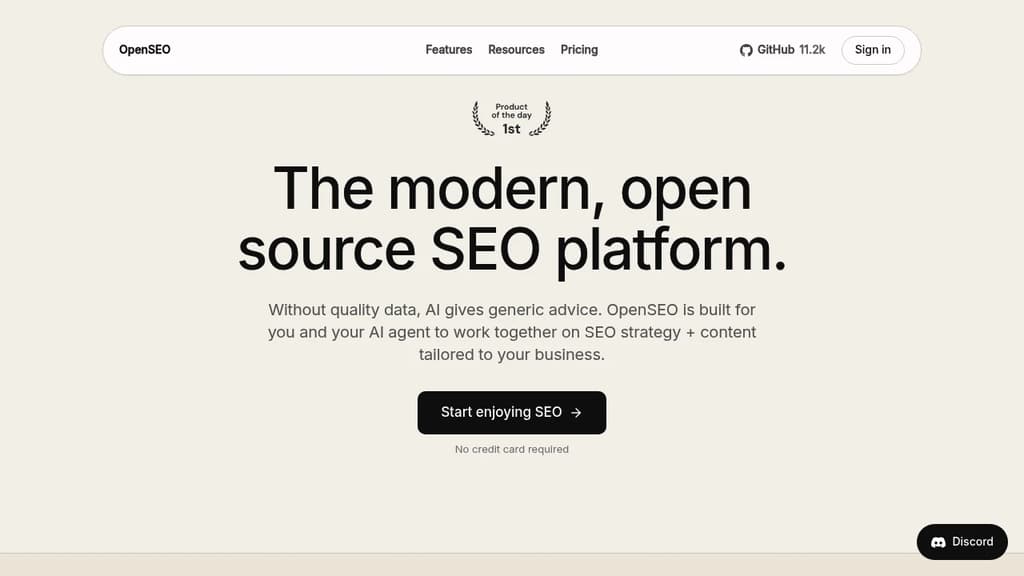
OpenSEO is a self-hosted SEO platform built for teams that want full control over their SEO data without paying recurring fees to tools like Semrush or Ahrefs. It's MIT-licensed and runs on Docker or Cloudflare, so you own the infrastructure and the data.
The platform covers the core workflows most SEO teams rely on:
- Keyword research for discovering and organizing target terms
- Backlink analysis to understand link profiles for any domain
- Competitor insights to monitor what competing sites are ranking for
- Rank tracking to follow keyword positions over time
- AI visibility to understand how your content appears in AI-generated search results
It connects to the DataForSEO API, which means you bring your own API key and pay for data directly rather than through a platform markup. That model works well for agencies or in-house teams with predictable data needs who want to cut out the subscription layer.
Because the source is fully open, teams can fork the codebase and build custom workflows on top of it. That's a real advantage if your SEO process doesn't fit neatly into what commercial tools offer. An Ubersuggest or Semrush subscription locks you into their interface; OpenSEO doesn't.
A hosted option exists for teams that don't want to manage their own infrastructure, but self-hosting is the primary path and keeps costs predictable.

Open source SEO audit tool that checks a site against 398 rules in 20 categories. It ships as a CLI, a desktop app, a Claude Code skill and an MCP server.
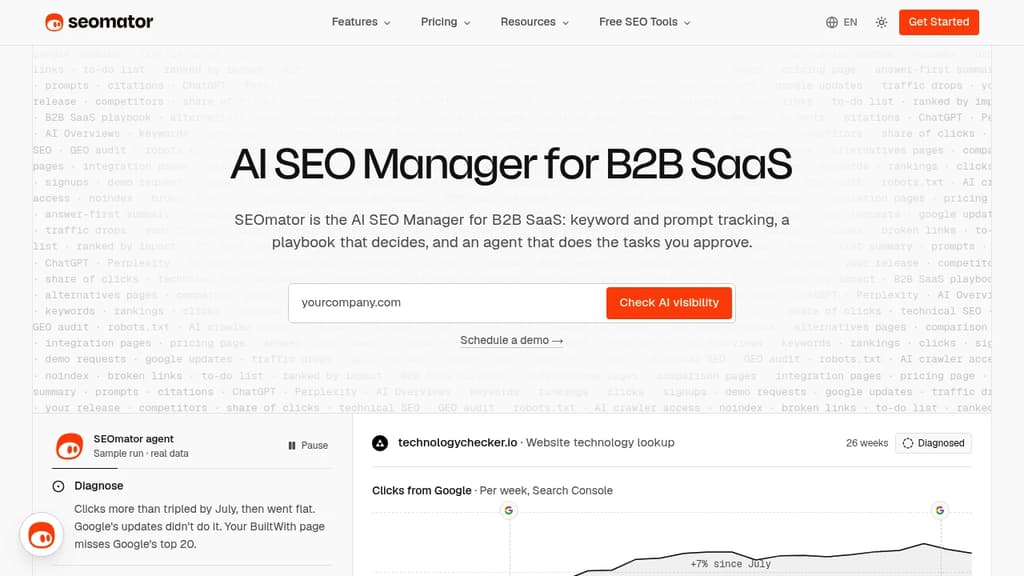
SEOmator is an SEO audit tool that checks a website against 398 rules in 20 categories and returns a report ranked by impact. It runs on your machine and keeps audit history in a local SQLite database.
You can run it from the command line, an Electron desktop app or a web dashboard (seomator serve). AI coding agents can run audits and read the findings through its Claude Code skill and MCP server.
- Technical SEO: redirect chains and loops, canonicals, hreflang, robots.txt and sitemap cross-checks, duplicate content and orphan pages.
- Performance: Core Web Vitals (LCP, CLS, FCP, TTFB, INP) measured with Playwright, plus per-asset checks for caching, compression and image sizing.
- Rendering: compares the raw and rendered DOM for single-page apps.
- AI search readiness: semantic HTML, AI bot access and llms.txt.
- More checks: structured data, accessibility, security headers and HTML validation.
Every rule comes with a specific fix. When a check can't take a reading, the report marks it as not measured instead of passing it.
For CI pipelines it has stable exit codes, JSON output, gates on score and chosen rules, and custom checks in seomator.toml. Reports come in five formats: console, JSON, HTML, Markdown and an XML format for LLMs.
A crawl covers 10 pages by default and up to 1,000 per run, so it suits audits rather than mapping very large sites. It has no search traffic data. The same team sells a hosted AI SEO agent on seomator.com, which is a separate, closed source product.

People are looking for alternatives to...
View all alternatives
Spotify

Claude

Claude Code

CapCut

Amazon Prime

Lovable
 Stellar Hosted – Managed Open Source software hosting in the EU: secure, compliant, fast.

 Docmost