nanobot vs NanoClaw
Learn how nanobot and NanoClaw differ in their key features, development activity, technology
stack and community adoption, so you can decide which of these ai personal assistants is best for you.
Learn how nanobot and NanoClaw differ in their key features, development activity, technology stack and community adoption, so you can decide which of these ai personal assistants is best for you.

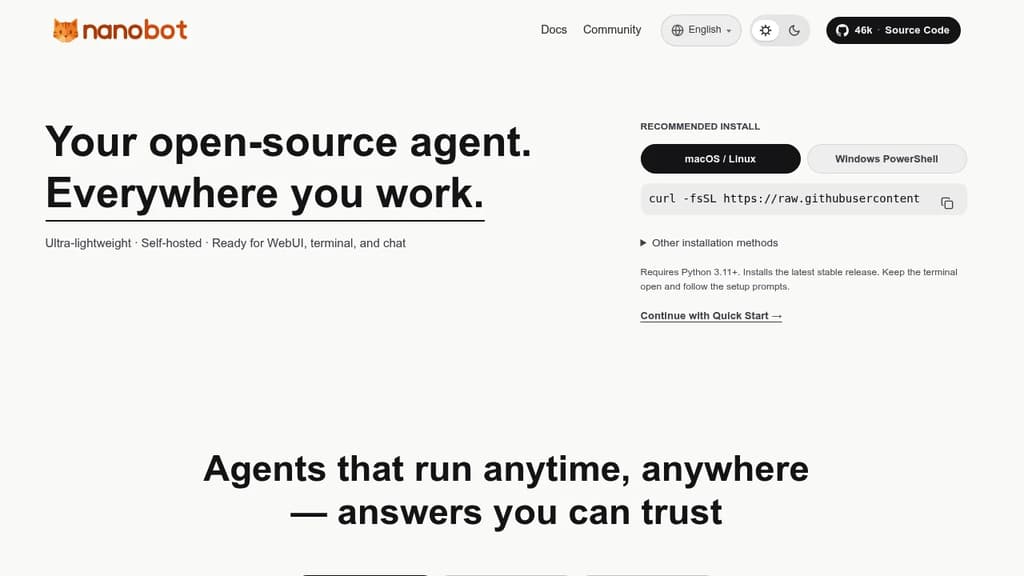
nanobot
Last 30 days
Last commit
2 hours agoRepository age
9 monthsVersion
v0.3.5License
MITSelf-hosted
YesRepository
hkuds/nanobot

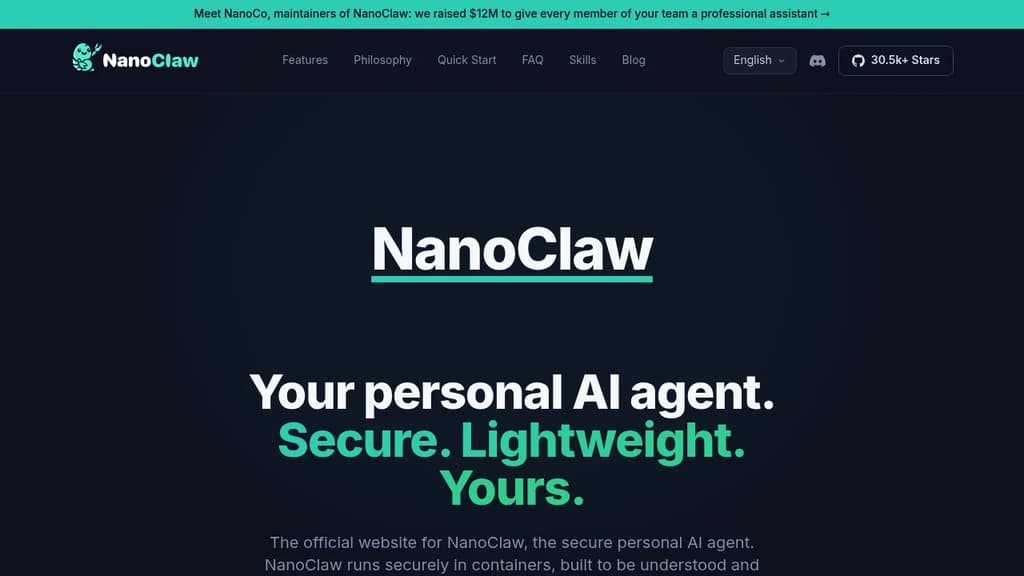
NanoClaw
Last 30 days
Last commit
3 hours agoRepository age
9 monthsVersion
v2026.10.0License
MITSelf-hosted
YesRepository
nanocoai/nanoclaw
Detailed Comparison
nanobot appears to have several advantages over NanoClaw, particularly in popularity and growth. Consider your specific needs regarding popularity, growth, activity, technology, maturity, licensing and features when making your decision.
nanobot appears to have several advantages over NanoClaw, particularly in popularity and growth. Consider your specific needs regarding popularity, growth, activity, technology, maturity, licensing and features when making your decision.
Community & Popularity
nanobot leads in popularity with 49,357 stars vs 31,016 stars for NanoClaw. The 59% higher star count indicates stronger community adoption. In terms of developer contributions, NanoClaw has 12,709 forks, indicating strong developer engagement.
Growth Momentum
nanobot is growing faster, adding 762 stars in the last 30 days (+1.6%) against adding 171 stars for NanoClaw (+0.6%). nanobot is both larger and pulling further ahead.
Development Activity
Both projects show recent activity, with nanobot last updated 2 hours ago and NanoClaw 3 hours ago.
Technology Stack
Both tools share common technology foundations, being built with JavaScript, Bash, Typescript, Python. However, they differ in their additional technology choices: nanobot uses CSS, JSX while NanoClaw leverages Swift.
Project Maturity
Both projects started around the same time, with nanobot beginning 9 months ago and NanoClaw 9 months ago.
Licensing
Both projects use the MIT license, providing identical terms for usage and distribution.
Use Cases & Features
Both tools serve similar use cases in AI Personal Assistants. However, they also have distinct specializations: nanobot also focuses on AI Agent Platforms.
Hosting & Deployment
Both nanobot and NanoClaw offer self-hosting capabilities, giving you full control over your data and infrastructure.
Other tool comparisons to consider
nanobotvs
 OpenClawnanobot
vs
 Hermes Agentnanobot
vs
 AutoGPTnanobot
vs
 LobeChatnanobot
vs
 ZeroClawnanobot
vs
 NemoClawnanobot
vs
 Kortixnanobot
vs
 Agent Zeronanobot
vs
 IronClawnanobot
vs
 OpenBotnanobot
vs
 Rakazonanobot
vs
 CodyncNanoClaw
vs
OpenClawNanoClawvs
Hermes AgentNanoClawvs
ZeroClawNanoClawvs
 EigentNanoClaw
vs
OpenBotNanoClawvs
RakazoNanoClawvs
 MausBotNanoClaw
vs
Codync InfluxDB – The purpose-built time series platform for high-velocity ingestion and real-time queries at scale.