Bytebase vs Tabularis
Learn how Bytebase and Tabularis differ in their key features, development activity, technology
stack and community adoption, so you can decide which of these database tools & guis is best for you.
Learn how Bytebase and Tabularis differ in their key features, development activity, technology stack and community adoption, so you can decide which of these database tools & guis is best for you.

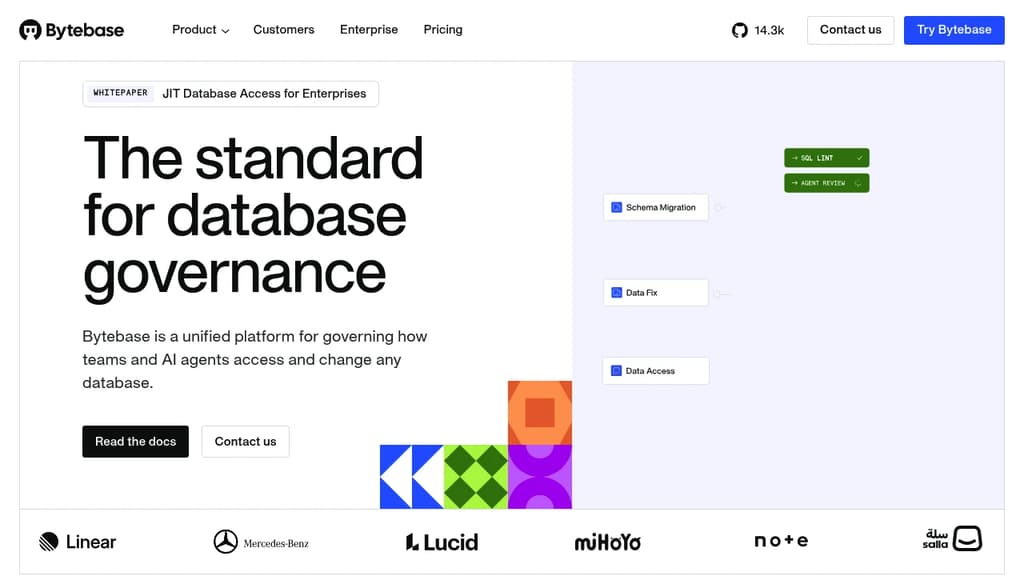
Bytebase
Last 30 days
Last commit
2 hours agoRepository age
6 yearsVersion
3.24.1License
MITSelf-hosted
YesRepository
bytebase/bytebase

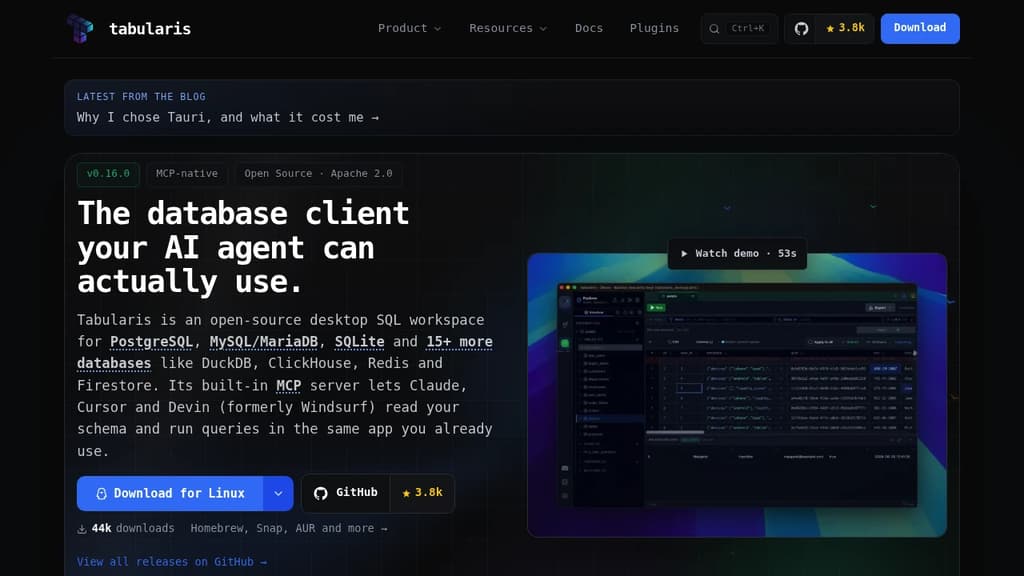
Tabularis
Last 30 days
Last commit
4 hours agoRepository age
10 monthsVersion
v0.32.0License
Apache-2.0Repository
tabularis
Detailed Comparison
Bytebase appears to have several advantages over Tabularis, particularly in popularity, maturity, licensing and features. Consider your specific needs regarding popularity, growth, activity, technology, maturity, licensing and features when making your decision.
Bytebase appears to have several advantages over Tabularis, particularly in popularity, maturity, licensing and features. Consider your specific needs regarding popularity, growth, activity, technology, maturity, licensing and features when making your decision.
Community & Popularity
Bytebase leads in popularity with 14,691 stars vs 5,435 stars for Tabularis. The 170% higher star count indicates stronger community adoption. In terms of developer contributions, Bytebase has 1,010 forks, indicating strong developer engagement.
Growth Momentum
Tabularis is growing faster, adding 248 stars in the last 30 days (+4.8%) against adding 141 stars for Bytebase (+1%). Tabularis is the smaller project of the two, so it is closing the gap rather than extending a lead.
Development Activity
Both projects show recent activity, with Bytebase last updated 2 hours ago and Tabularis 4 hours ago.
Technology Stack
Both tools share common technology foundations, being built with JavaScript, CSS, Bash, Typescript, JSX, Python. However, they differ in their additional technology choices: Bytebase uses Golang, Vue while Tabularis leverages Rust, Tauri.
Project Maturity
Bytebase has been in development longer, starting 6 years ago, compared to Tabularis which began 10 months ago. This 5.1-year head start suggests Bytebase may have more mature features and established processes.
Licensing
Bytebase uses the MIT license, which is more permissive than Tabularis's Apache-2.0 license, potentially offering greater flexibility for commercial use and integration.
Use Cases & Features
Both tools serve similar use cases in Database Tools & GUIs. However, they also have distinct specializations: Bytebase also focuses on CI/CD Platforms.
Hosting & Deployment
Bytebase provides self-hosting options for complete data control and customization, while Tabularis may be primarily cloud-based or require different deployment approaches.




 Sent – A unified API for sending messages across SMS, RCS, and apps like WhatsApp.